
PCI — Play & Culture Intervention
Play & Culture Intervention for ASD: social motivation and interaction skills through everyday situational interactive play on the 'from life to life' principle.
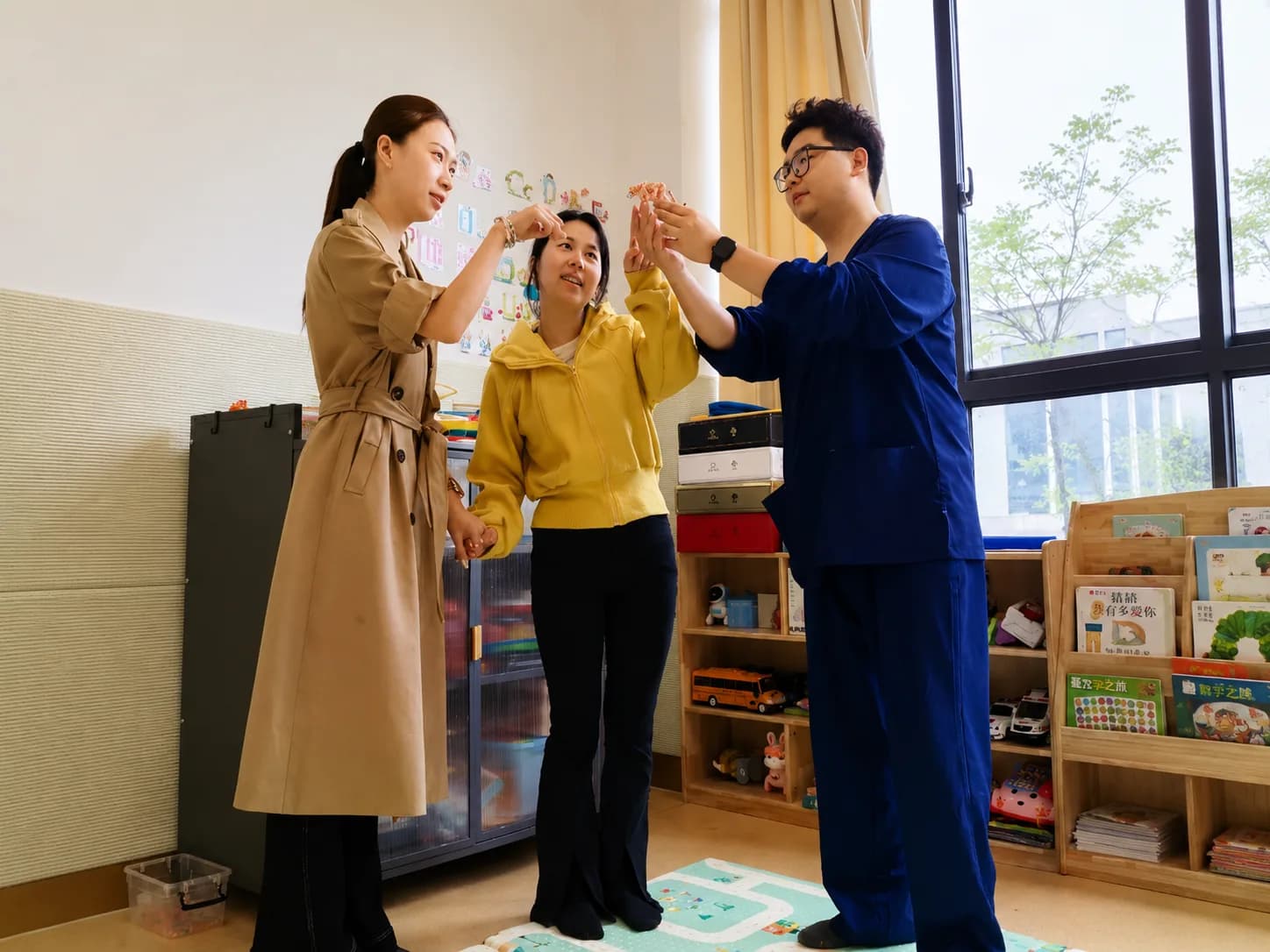
How the procedure works
PCI (Play & Culture Intervention) is a leading international model for working with ASD. It rests on three principles: child-centered, social interaction as the core, play as the vehicle. Through everyday, situational, interactive play the child learns social rules, reading expressions and intentions, and the skills of real communication. The method follows the principle 'from life to life': social interaction first — then speech; contact first — then learning; the desire to interact first — then skills.
At Hanshi NeuroLife International Rehabilitation Center (Shangrao), PCI is part of the comprehensive program for deficits in social communication, withdrawal, lack of eye contact and joint attention, and for comorbid speech delay and inability to play. It is especially effective within the GROW program at stages R (Rise Up) and O (Open Social), where the child transitions from a 'parent + child' format to independent group work and gradually masters social scenarios. PCI combines with DIR/Floortime, Super Skills, ABA, and other directions of the program.
Strengths of the method as delivered at the center: life scenarios — intervention 'in passing' during meals, play, and walks; high face-to-face interactivity; play-based approach without resistance; motivation as priority — the desire to interact first, then skills; reproducibility within the family; evidence base; suitable for all ages with ASD.
What matters most for parents
One of PCI's strengths is reproducibility within the family. Parents are taught specific techniques of interactive play in everyday situations (at the table, on walks, while getting dressed). This significantly amplifies the program's results and helps sustain the child's social motivation as a resource for development. The 'from life to life' principle means that skills are applied directly in real life — without artificial training situations.
Initial assessment of social communication
Specialists assess social motivation, eye contact, joint attention, comprehension of facial expressions, initiative, type of play, and capacity for pretend play; the child's interests and strengths are identified.
Designing an individualized PCI plan
Everyday scenarios are matched to the child (at the table, on a walk, in the play room), along with interactive formats and priorities — social rules, turn-taking, cooperation, and understanding expressions.
Regular face-to-face interactive sessions
Sessions run in a face-to-face format, in everyday scenarios, following the child's interest. Principles: contact first, then learning; motivation first, then skills; high frequency of interactive practice.
Coaching parents in home practice on the 'from life to life' principle
Parents are taught specific techniques of interactive play in everyday situations (at the table, on walks, while getting dressed). This significantly amplifies the program's results.
Re-assessment of progress and integration with other methods
Regular re-assessment against achieved goals; PCI combines with DIR/Floortime, Super Skills, ABA, and Theory of Mind. It is especially effective at stages R (Rise Up) and O (Open Social) of the GROW program.
Indications and contraindications
Indications
Contraindications
What diagnoses it helps with PCI — Play & Culture Intervention
Book a free consultation
Leave a short request — a coordinator will contact you within 5 minutes, answer your questions and suggest the first steps.