
Facial nerve palsy
Also known as: Facial nerve paralysis, Bell's palsy, Facial neuropathy
A rehabilitation program for facial nerve palsy in children aged 1-14 at Hanshi NeuroLife (Shangrao). Leading methods - pediatric acupuncture, neuromuscular electrical stimulation, Tui Na massage, and oral-motor therapy.
What is Facial nerve palsy?
Facial nerve palsy is weakness or paralysis of the facial muscles on one side of the face due to damage to the facial nerve (cranial nerve VII). The picture includes facial asymmetry, drooping of the corner of the mouth, incomplete closure of the eyelid on the affected side, smoothing of the nasolabial fold, and difficulty smiling and frowning. In some children - taste disturbances, heightened sensitivity to sounds on one side, drooling, and articulation difficulties. In children, facial nerve palsy can develop after neuroinfections, after cold exposure, against the background of otitis, after trauma, or as a birth injury; in some children - the idiopathic form (Bell's palsy).
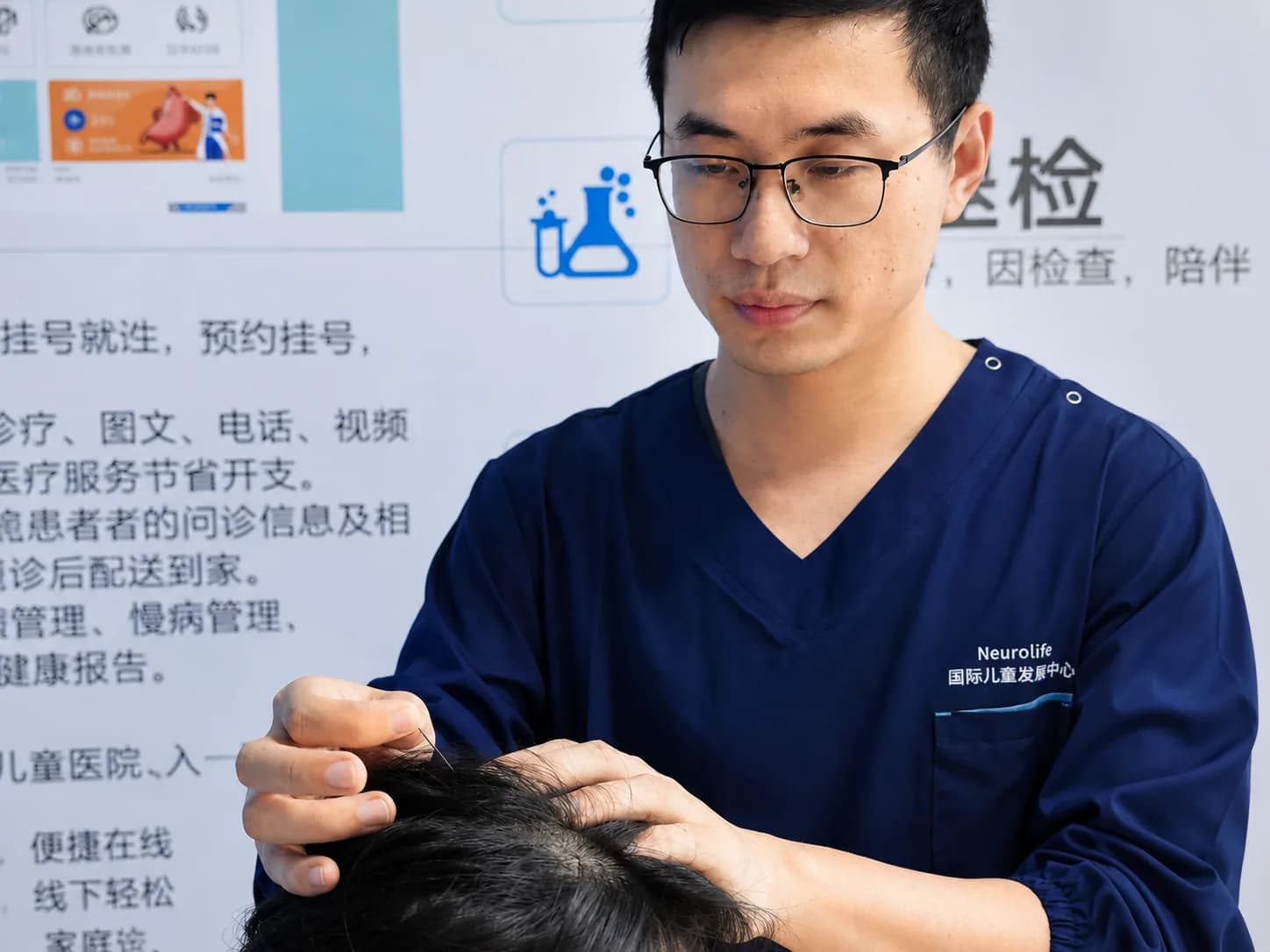
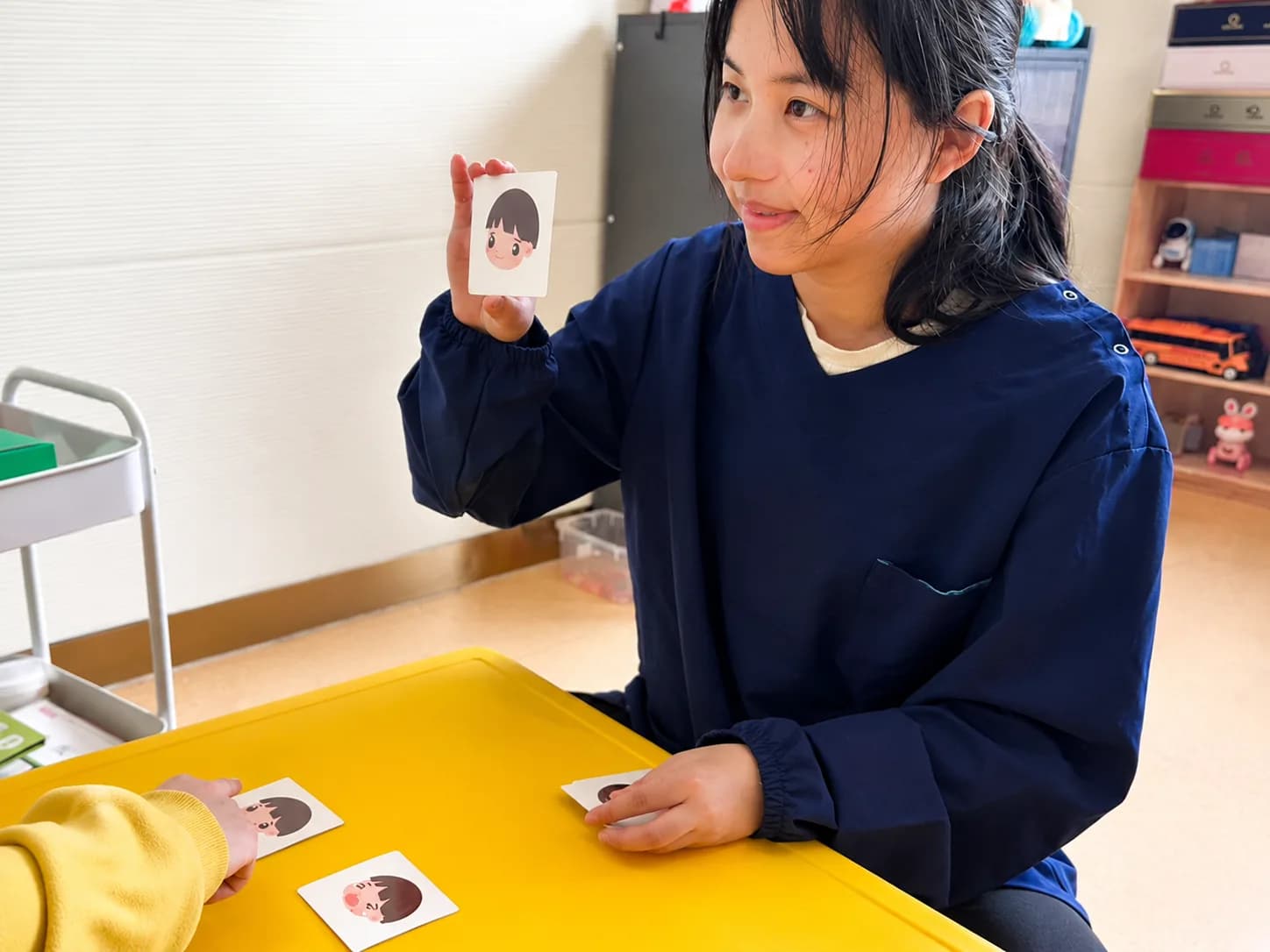
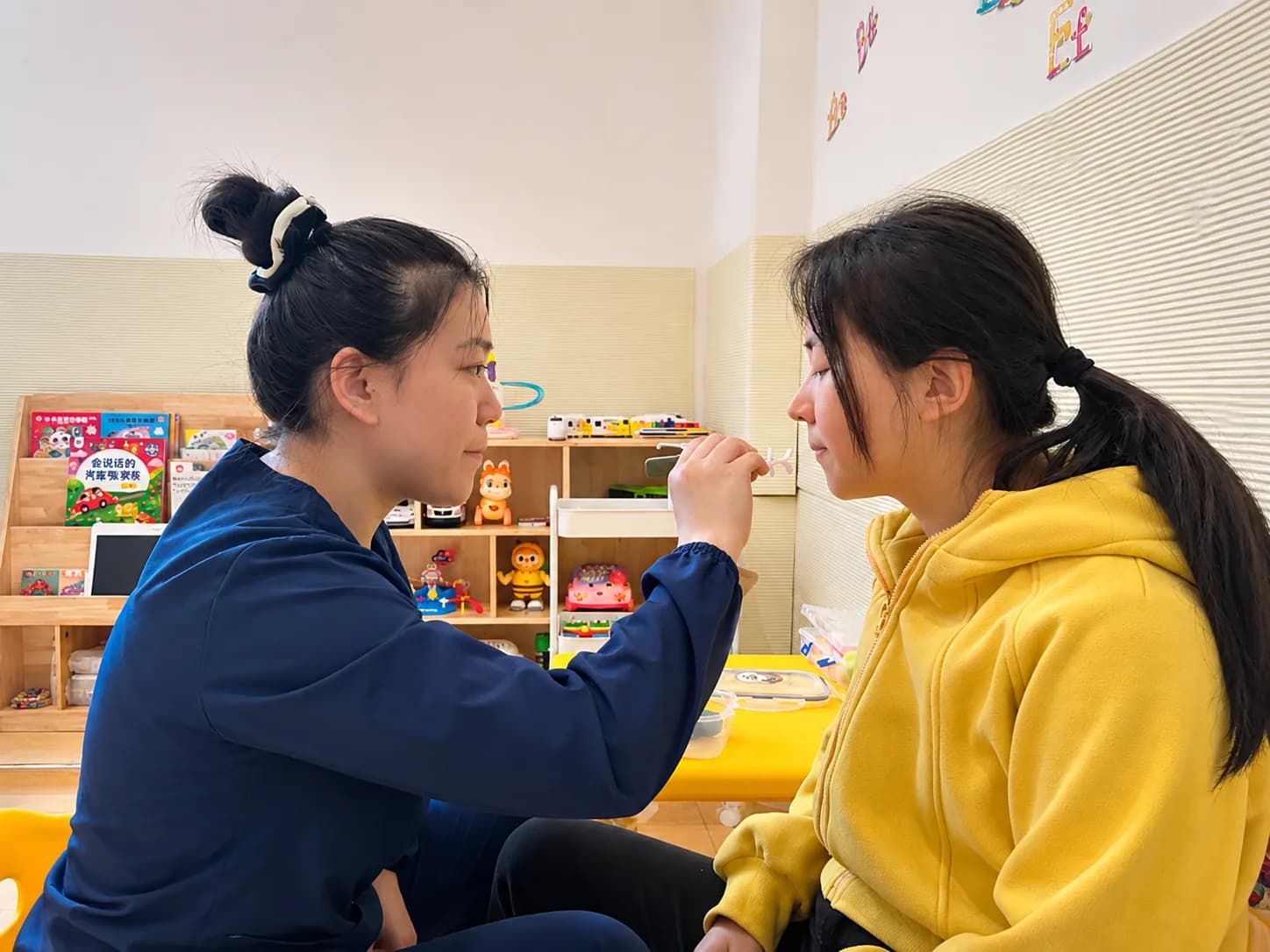
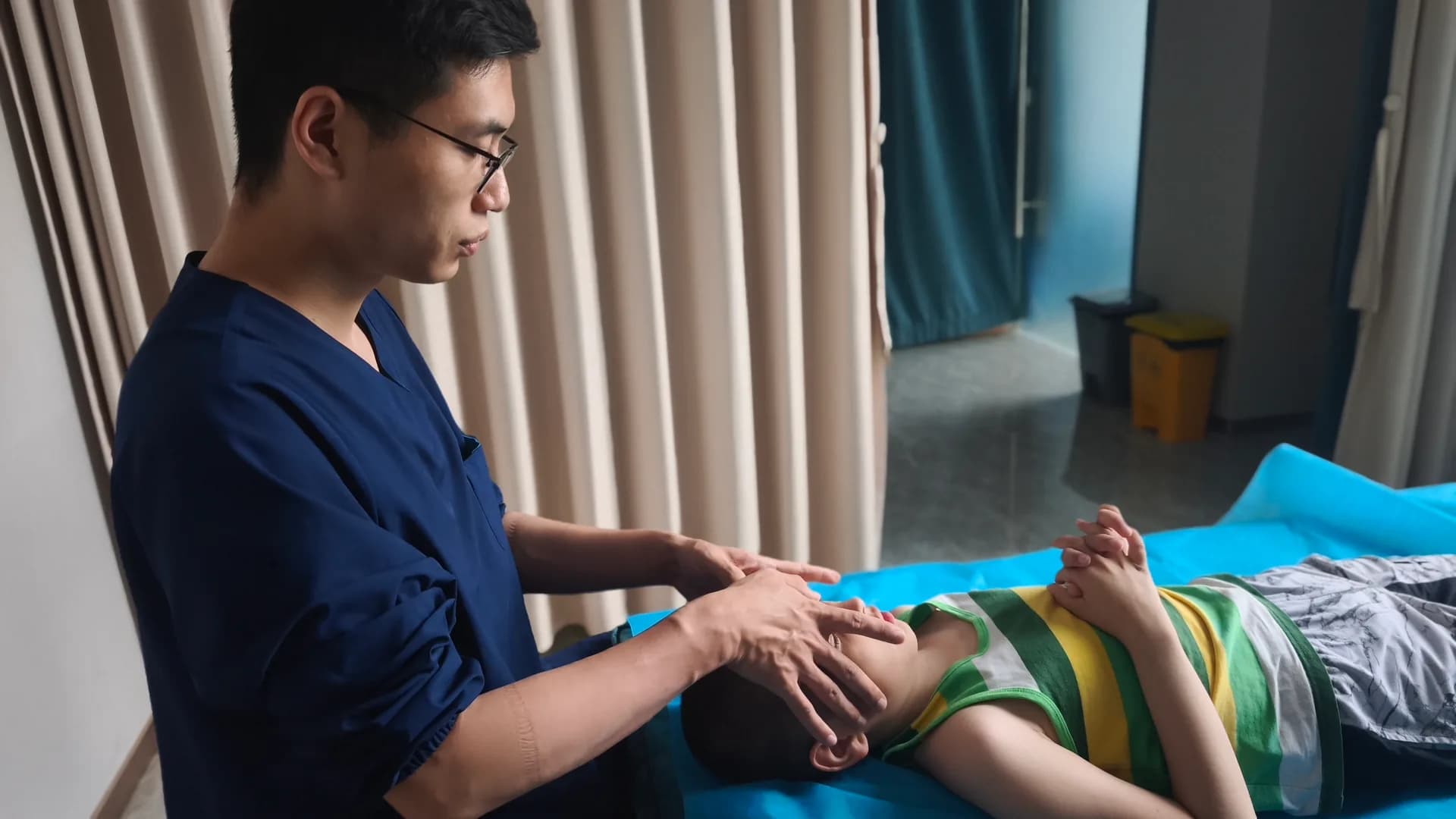
At Hanshi NeuroLife International Rehabilitation Center (Shangrao), the program for facial nerve palsy is built on a combination of TCM methods and instrumental physiotherapy. The leading method is pediatric acupuncture: facial nerve palsy is one of the key indications for acupuncture reflexotherapy at the center. Special ultra-thin pediatric needles are used; the method is non-invasive, painless or minimally painful, safe, and gentle. Individual point selection follows the principle of "one person - one prescription," with TCM differential diagnosis. Neuromuscular electrical stimulation activates the affected facial muscles, builds strength, and regulates tone. Pediatric Tui Na massage complements the program - it restores channel patency and harmonizes qi and blood. In case of oral-motor manifestations (drooling, articulation problems), oral-motor therapy is added. When indicated - neuroregulation.
What parents should know
The principle of early intervention in neurology is especially important: the younger the child, the better the recovery of nerve function. After the diagnosis is established, systematic work should begin as soon as possible - this significantly affects the prognosis. Parents perform some of the exercises and massage techniques at home every day - specialists teach the specific techniques.
Causes
Develops after neuroinfections, cold exposure, otitis, trauma, or as a birth injury. In some children it is the idiopathic form (Bell's palsy).
Symptoms
Facial asymmetry, drooping mouth corner, incomplete eyelid closure, smoothed nasolabial fold. Taste disturbances, hyperacusis and drooling are possible.
Diagnostics
Neurological exam assessing facial muscle groups and symmetry at rest and in motion. Progress is tracked by comparing muscle function before and after the course.
Prognosis and treatment approach
With early systematic work the prognosis is usually favorable: the younger the child, the better the recovery. Leading methods are pediatric acupuncture, neuromuscular stimulation and Tui Na massage.
How we treat Facial nerve palsy
Diagnostics
Comprehensive examination and patient assessment by an international team of specialists
Treatment plan
Development of an individual rehabilitation program considering diagnosis specifics
Therapy
Intensive course of procedures: physical therapy, massage, physiotherapy, acupuncture and other methods
Results
Progress evaluation, home recommendations and maintenance therapy plan
Treatment procedures: Facial nerve palsy
Doctors treating this condition










Frequently asked questions: Facial nerve palsy
Book a free consultation
Leave a short request — a coordinator will contact you within 5 minutes, answer your questions and suggest the first steps.