
H&B Neurolife
Procedure

Individual 1:1 sessions (个别化训练)

Foundational format for targeted work — 'one child, one program': an individually tailored integration of ABA, sensory integration, speech, and social work.
30–45 minutes
duration
1–3 months
course
4–8 weeks
effect
Fill out the form
Description

How the procedure works

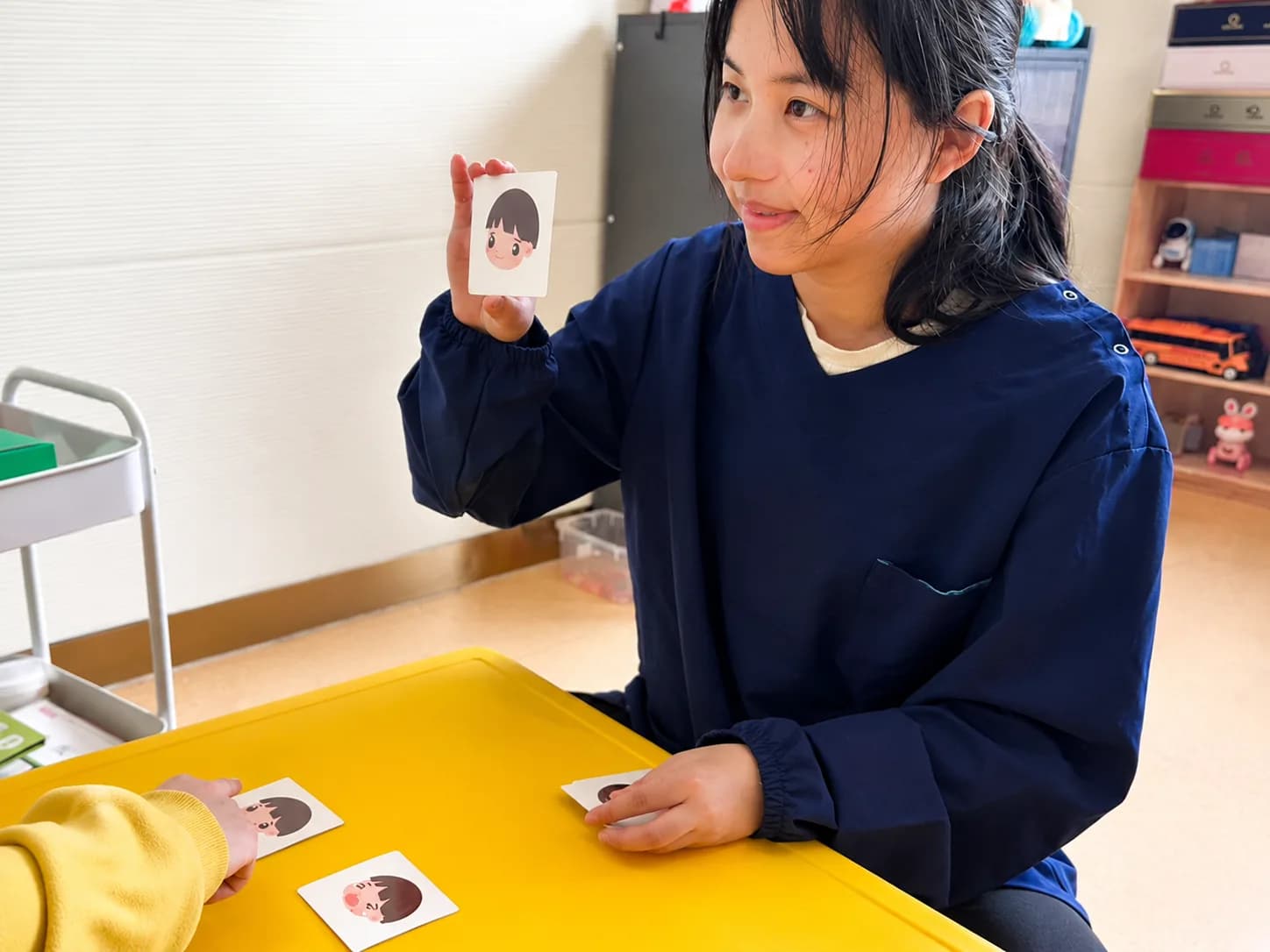
Individual 1:1 sessions (个别化训练) are the foundational format for targeted work at H&B Neurolife International Rehabilitation Center (Shangrao). The program is built individually for each child: it integrates elements of ABA, sensory integration, speech therapy, and social approaches into a single coordinated plan. The guiding principle is 'one child — one program', with dynamic goal adjustment based on regular re-assessment.

The individual format is not a standalone method — it is a format within which different methods are delivered. It is critical at stages that demand the specialist's focused attention on one child: at the start of the program for most children, at the G stage of the GROW program (parent + child), and for specific tasks (articulation placement, work with a particular form of behavior, work with anxiety). As progress accumulates and foundational skills are formed, the child transitions to small-group and group formats (R, O, W stages of the GROW program). At the same time, some tasks continue to require individual work — the program selects the optimal balance of formats for each child.

Strengths of the format as delivered at the center: 'one child — one program' with maximum targeting; the specialist's focused attention; integration of methods into a single coordinated plan; dynamic goal adjustment; effectiveness for specific tasks (articulation, particular behavioral skills, work with anxiety); suitable at different stages of the GROW program.

What matters most for parents

The individual format is as targeted as it gets, but it requires more specialist resources. That is why the center uses it where it delivers the greatest impact — at critical stages and for specific tasks. 'One child — one program' does not mean 'individual throughout the entire course': it means designing a unique plan for the specific child, which can then be delivered in different formats.

1

Comprehensive multi-scale assessment

Our specialists conduct a comprehensive assessment — Gesell, PEP, and when indicated ABC, Shuangxi, GMFM, and S-S. Baselines are recorded across every relevant area of development.

2

Designing the individualized program

Based on the assessment, a unique 'one child — one program' plan is built: which methods are integrated (ABA, sensory integration, speech therapy, social approaches), what the priorities are, and what pace and difficulty to set.

3

Regular sessions in a 1:1 format

The specialist works with one child, focusing attention on specific tasks: articulation placement, particular behavioral skills, work with anxiety, fine motor skills. Every session is logged in data.

4

Coaching parents for home practice

Parents learn specific techniques that reinforce the program at home (at least 1 hour per day). Alignment between family and center significantly amplifies the result.

5

Re-assessment and transition to mixed formats

Regular data-based re-assessment; as progress accumulates, small-group and group formats are added (R, O, W stages of the GROW program). The mix of formats is matched to each child.

Virtual Tour

Explore the Room in 360°

Click and drag to look around the room

Important information

Indications and contraindications

Indications

Children with ASD, global developmental delay, or cerebral palsy — practically the full caseload at the center
Post-encephalopathy conditions, motor and speech disorders
Sensory integration disorder, emotional and behavioral problems
Stage G of the GROW program (parent + child)
Start of the program for most children
Specific tasks that require a focused format (articulation placement, particular behavioral skills)
Work with pronounced anxiety and emotional instability

Contraindications

Acute infectious diseases
Fever above 37.1 °C
Severe decompensated somatic conditions
Acute phase of neurological complications (uncontrolled epilepsy)
Application

What diagnoses it helps with Individual 1:1 sessions (个别化训练)

ADHD

Hyperactivity (ADHD)

A combination of attention deficit, hyperactivity, and impulsivity that affects learning and social adaptation.

Learn more
Aggression

Aggression, impulsivity, and behavioral disturbances

A group of behavioral manifestations — aggression toward others, impulsivity, eating inedible objects (pica), and elopement.

Learn more
Anxiety

Anxiety and Fear of Novelty

Heightened anxiety, fear of new environments, fear of strangers, and pronounced shyness.

Learn more
Aphasia

Aphasia

Loss of previously acquired speech or impaired comprehension due to damage to the brain's language areas.

Learn more
Attention

Attention deficit and restlessness

Reduced ability to sustain attention and regulate activity, without marked hyperactivity.

Learn more
Hearing

Auditory hypersensitivity

Heightened reaction to sound and poor auditory filtering — sounds are experienced as excessively loud, distressing, or painful.

Learn more
ASD

Autism and ASD

A neurodevelopmental condition that affects a child's social communication, speech, and behavior from early life.

Learn more
ASD+

ASD with co-occurring conditions

Autism spectrum disorder combined with GI problems, sleep disturbances, epilepsy, or inflammatory processes.

Learn more
Brachial plexus

Brachial plexus injury

Injury to the nerves of the brachial plexus, most often birth-related - causing weakness and limited movement of the upper limb.

Learn more
CP

Cerebral Palsy (CP)

A group of persistent motor disorders caused by non-progressive brain damage during the perinatal period.

Learn more
Chewing

Weak chewing and sucking difficulties

Reduced strength and coordination of the mouth muscles affecting chewing of solid foods and — in infancy — sucking.

Learn more
Cognition

Cognitive Developmental Delay

Delayed development of attention, comprehension, observation, logical thinking, and conceptual foundations.

Learn more
Coordination

Coordination and Balance Disorders

Impairments of vestibular balance, limb coordination, and control of the body in space.

Learn more
Depression

Depressive Symptoms

Persistently low mood, anhedonia, and emotional withdrawal in children and adolescents.

Learn more
Drooling

Drooling

Constant or episodic leakage of saliva from the mouth due to weak control of the mouth muscles and swallowing.

Learn more
Dysarthria

Dysarthria

Articulation and motor speech difficulties due to abnormal tone and coordination of the articulatory muscles.

Learn more
Dysphagia

Dysphagia (swallowing impairments)

Impairments of the swallowing act in children — choking, slowed bolus transit, risk of aspiration.

Learn more
Echolalia

Echolalia

Echoed speech — repetition of heard words and phrases without functional communicative content.

Learn more
Emotions

Emotional Instability and Self-Stimulation

Sharp swings in emotional state, a tendency to cry and have outbursts of anger, and self-stimulating behavior.

Learn more
Enuresis

Enuresis and Urinary Frequency

Involuntary urination (often at night) and/or frequent daytime urination in children aged 4–5 years and older.

Learn more
Epilepsy

Epilepsy as a comorbid condition

Epileptic seizures in children with ASD, CP, or post-encephalopathic conditions - requires coordinated management and rehabilitation.

Learn more
Facial palsy

Facial nerve palsy

Weakness or paralysis of the facial muscles on one side of the face due to damage to the facial nerve (cranial nerve VII).

Learn more
Fine motor

Weak Fine Motor Skills

Impairments of fine hand and finger movements affecting grasp, writing, tool use, and self-care.

Learn more
Gait

Gait Disorders

Atypical walking patterns — spastic, ataxic, paretic, toe-walking, and other features.

Learn more
GDD

Global Developmental Delay

A delay across several developmental domains at once — speech, motor function, cognition, and emotions.

Learn more
High risk

High-Risk Infants

Early intervention for infants with risk factors for developmental disorders — prematurity, perinatal injury, complex medical history.

Learn more
Intellect

Intellectual Disability

Persistent reduction of intellectual functions — from mild to severe — with varying support needs.

Learn more
Motor delay

Motor Developmental Delay

Delayed achievement of key motor milestones — rolling, sitting, crawling, standing, walking.

Learn more
Muscle tone

Muscle Tone Disorders

Hypertonia, hypotonia, and mixed muscle tone disorders in young children and older.

Learn more
Muscle weakness

Limb Muscle Weakness

Reduced muscle strength in the upper or lower limbs, affecting motor milestones and self-care skills.

Learn more
Eye contact

Lack of Eye Contact

Poor or absent eye contact — one of the earliest and most important signs of social-communication disorders.

Learn more
Joint attention

Lack of Joint Attention

The inability to share attention with another person on a common object or event — a foundational sign of social-communication disorders.

Learn more
Non-verbal

Non-verbal / minimally verbal

A state in which the child does not speak at all or uses an extremely limited set of words.

Learn more
OCD

Obsessive-Compulsive Symptoms

Intrusive thoughts and/or repetitive rituals that the child cannot control, affecting daily life.

Learn more
Picky eating

Oral hypersensitivity and food selectivity

Heightened sensitivity in the mouth area with the associated refusal of facial touch and pronounced food selectivity.

Learn more
Nerve injury

Peripheral nerve injury

Damage to peripheral nerves of different localization and etiology, affecting motor and sensory functions.

Learn more
Encephalopathy

Post-Encephalopathic Period

Rehabilitation after encephalopathy — restoring brain function, motor abilities, speech, and cognition.

Learn more
Self-injury

Self-injurious behavior

Intentional actions by the child that cause physical harm — hitting, biting, scratching, head-banging.

Learn more
SPD

Sensory dysregulation

Disorders of processing and integration of sensory signals — visual, auditory, tactile, vestibular, proprioceptive.

Learn more
Sleep

Sleep Disorders and Nighttime Crying

Difficulty falling asleep, frequent night waking, restless sleep, and nighttime crying in children.

Learn more
Social communication

Social Communication Deficit

A core communication impairment — weak social motivation, difficulty maintaining dialogue, and inability to read facial expressions, tone, and intentions.

Learn more
Social withdrawal

Social Withdrawal and Lack of Interest in Interaction

Being absorbed in oneself, weak social motivation, fear of strangers, and difficulty understanding others' emotions.

Learn more
Speech delay

Speech Developmental Delay

A delay in the child's development of receptive and expressive language relative to age norms.

Learn more
Stereotypies

Stereotypies and repetitive behavior

Repetitive, monotonous movements, actions, or rituals — typical for ASD and sensory dysregulation.

Learn more
Touch

Tactile hyper- and hyposensitivity

Disorders of tactile processing — heightened or reduced sensitivity to touch and sensory-seeking behavior.

Learn more
Tics

Tics (Tic Disorder)

Involuntary repetitive rapid movements or vocalizations that are poorly controlled by voluntary effort.

Learn more
Vestibular

Fear of vestibular stimuli

Marked fear of movement related to changes of body position in space — jumping, spinning, slides, swings.

Learn more

Book a free consultation

Leave a short request — a coordinator will contact you within 24 hours, answer your questions and suggest the first steps.

Leave a request

We use cookies and analytics to improve the website experience. Privacy Policy