Physical Therapy (PT)
Targeted training of gross motor skills, balance, and coordination — the foundation of motor development for children with cerebral palsy and motor impairments.
How the procedure works
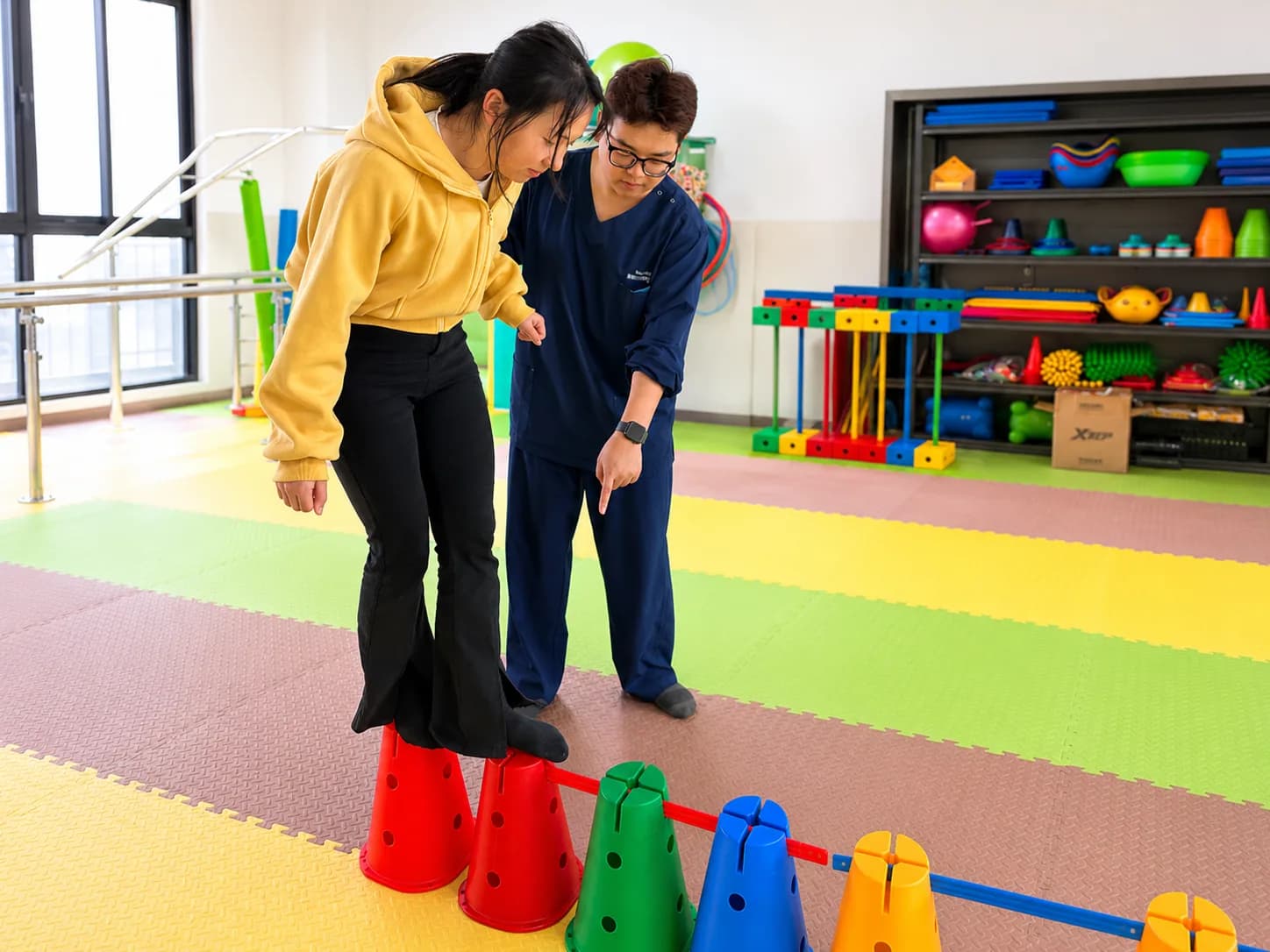
Physical Therapy (PT) is a rehabilitation discipline that works with gross motor skills, balance, and coordination. Targeted training restores and develops motor developmental milestones (rolling, sitting, crawling, standing, walking), corrects movement patterns (spastic, ataxic, paretic), and strengthens body control. PT is one of the key focus areas for cerebral palsy and a wide range of motor impairments.
At the Hanshi NeuroLife International Rehabilitation Center in Shangrao, PT works as part of a comprehensive programme. The programme is tailored individually to the type of impairment — spastic pattern, hypotonia, ataxia, paresis and weakness, gait disturbances. It is combined with neuromuscular electrical stimulation (muscle activation, tone regulation), sensory integration (vestibular and proprioceptive foundation), occupational therapy (fine motor skills and self-care), and pediatric acupuncture and Tui Na massage (one of the key TCM focus areas for motor impairments). For cerebral palsy, the minimum comprehensive rehabilitation course is 2–3 months with regular reassessment using GMFM and other tools.
Advantages of the method as delivered at the centre: targeted programmes matched to the type of impairment; a game-based format, especially for younger children; combination with sensory integration, NMES, OT, and TCM methods; regular reassessment using the GMFM scale — progress is visible in data; suitable for children of different ages and levels.
What matters for the parent
Motor progress requires regular daily work. Part of the exercises the child performs at home with the parent — specialists at the centre teach specific exercises and Tui Na massage techniques. In cerebral palsy, the work is long-term and staged; progress on the GMFM scale and other tools shows dynamics and allows the programme to be adjusted.
Initial assessment of motor function (including GMFM)
Specialists assess motor developmental milestones, movement patterns, muscle tone, strength, balance, and coordination. For cerebral palsy, the GMFM (Gross Motor Function Measure) scale is used — the gold standard for quantitative assessment.
Individualized programme based on the type of impairment
The programme is tailored to the specific pattern — spastic in cerebral palsy, hypotonia, ataxia, paresis and weakness, gait disturbances. Realistic staged goals are set.
Regular targeted training of gross motor skills
Training in a game-based format (especially for younger children): motor developmental stages, balance, coordination, postural control, vestibular foundation, gait patterns. Specialised equipment is used.
Integration with other methods of the centre
PT is combined with neuromuscular electrical stimulation (NMES), sensory integration, occupational therapy (OT), pediatric acupuncture, and Tui Na massage. For cerebral palsy, the minimum comprehensive rehabilitation course is 2–3 months.
Regular reassessment using GMFM and plan adjustment
Regular GMFM measurements show progress in scores; on this basis, the plan is adjusted — staged goals, focus areas, transition to more complex tasks.
Explore the Room in 360°
Click and drag to look around the room
Indications and contraindications
Indications
Contraindications
Who performs the procedure



What diagnoses it helps with Physical Therapy (PT)
Book a free consultation
Leave a short request — a coordinator will contact you within 5 minutes, answer your questions and suggest the first steps.