
Fear of vestibular stimuli
Also known as: Vestibular hypersensitivity, Gravitational insecurity, Fear of movement, Fear of swings and slides
Program for fear of vestibular stimuli (jumping, spinning, slides) in children aged 1–14 years at the Hanshi NeuroLife center (Shangrao). Gentle gradual work through sensory integration on specialized equipment.
What is Fear of vestibular stimuli?
Fear of vestibular stimuli is a marked fear of movement involving changes of body position in space: swings, carousels, slides, jumping, inverted positions. The child avoids active physical play; this is often accompanied by weak balance, insecurity on uneven surfaces, and anxiety during passive carrying or being lifted. The cause is most often sensory dysregulation: the vestibular system processes signals inefficiently, and movement is experienced as threatening. It occurs in ASD, in sensory integration disorders, in anxiety states, and in post-encephalopathic conditions.
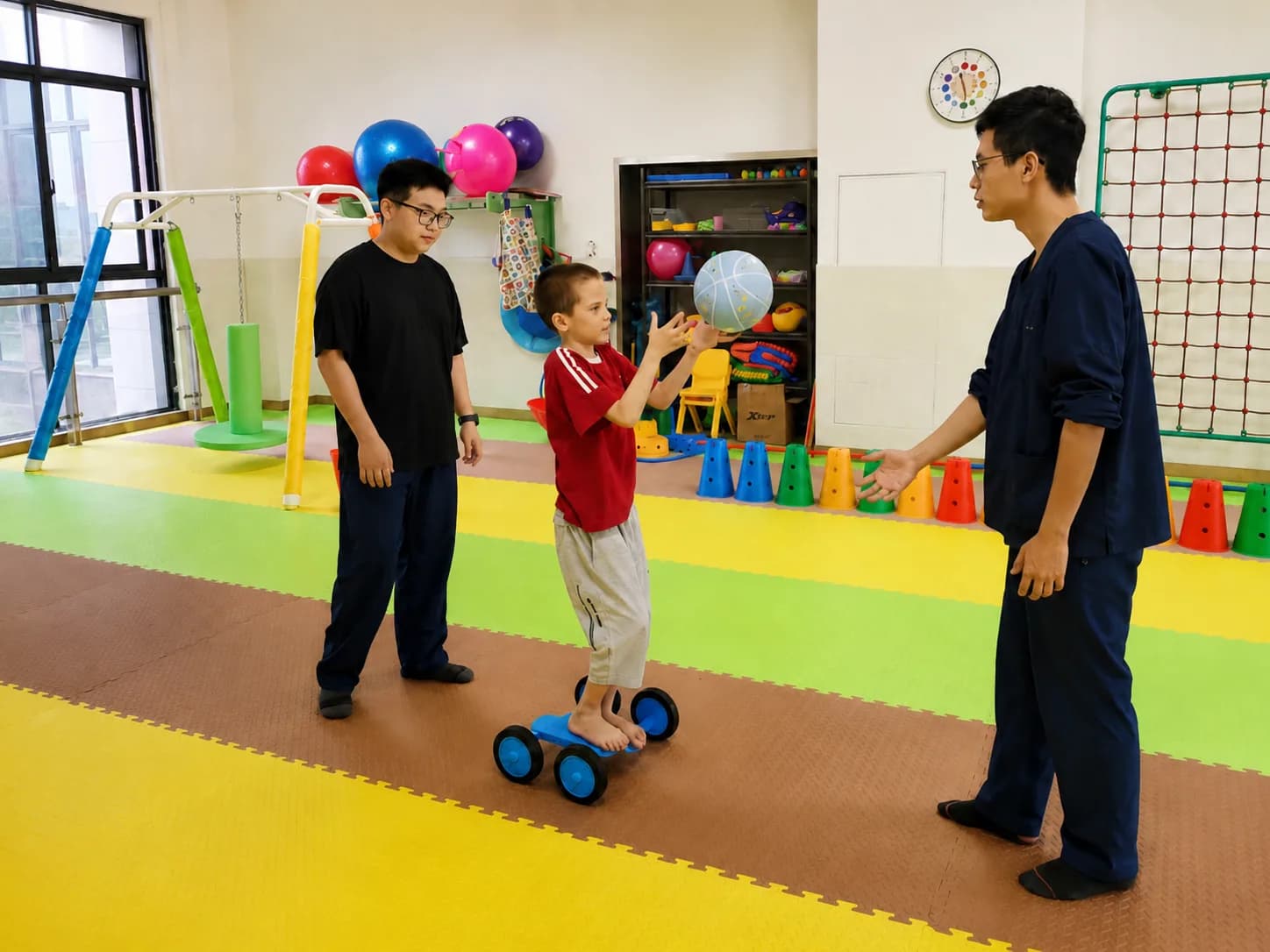
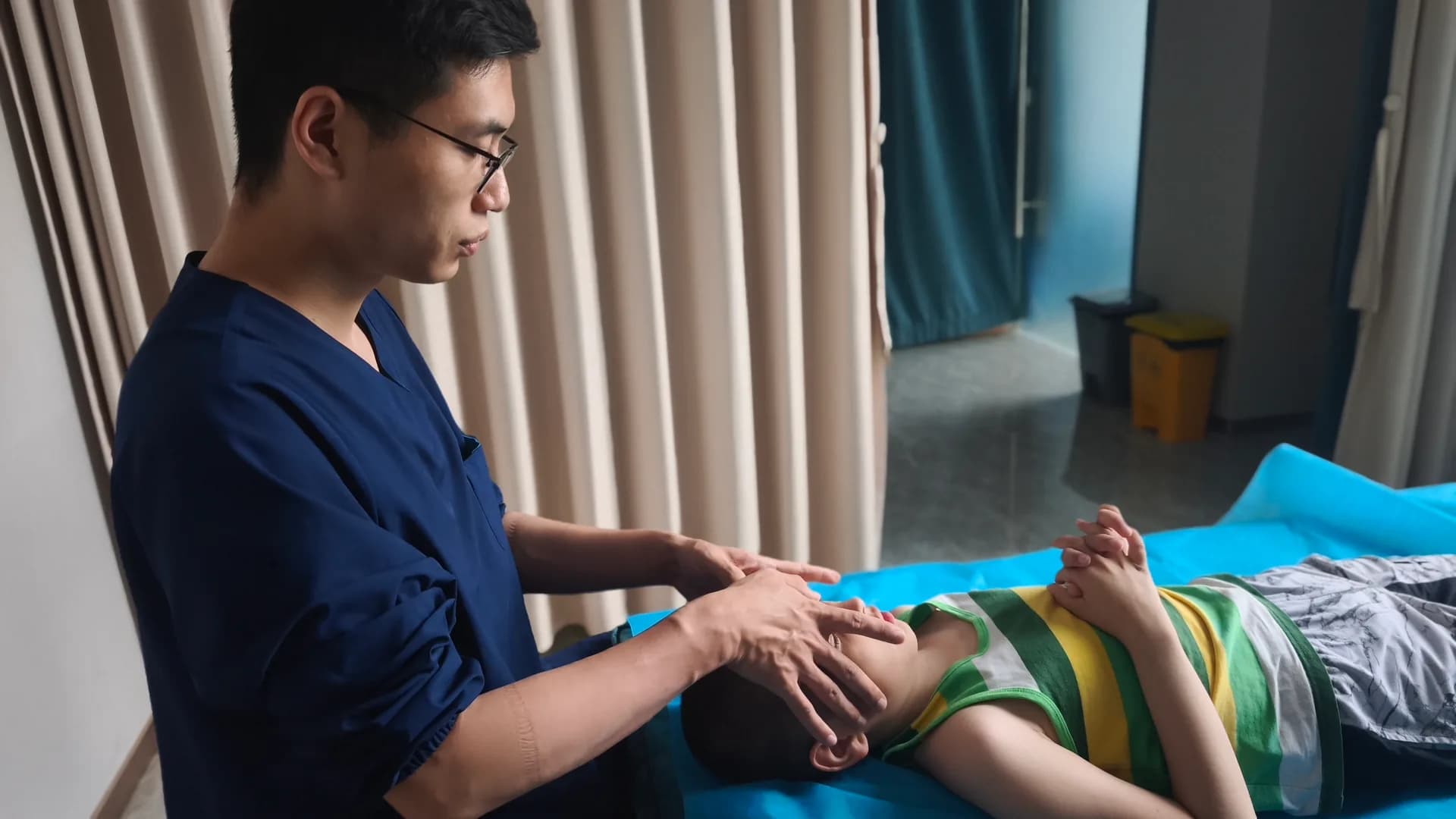
At the Hanshi NeuroLife International Rehabilitation Center (Shangrao), the program for fear of vestibular stimuli is gentle and gradual. The core method is sensory integration on specialized equipment (swings, hammocks, tunnels, spinning discs, balls). Work begins with weak vestibular stimuli in the safest possible play environment and gradually expands as tolerance develops. PT works on balance and coordination. Occupational therapy provides general body control. Orff music therapy gives a rhythmic foundation and stress-free movement. Pediatric acupuncture and Tui Na massage complement the program.
What parents should know
Forced "habituation" usually intensifies fear and reinforces avoidance. The program respects the child's pace. As tolerance expands, the child begins to use movement as a resource rather than a threat. Regular reassessment shows progress. At home, it is important not to insist on activities that frighten the child; specialists provide concrete recommendations on how to support them.
Causes
Most often sensory dysregulation: the vestibular system processes signals inefficiently, so movement feels threatening. Seen in ASD, anxiety states, and post-encephalopathic conditions.
Symptoms
Fear of swings, slides, jumping, and inverted positions; avoidance of active play. Often with weak balance, fear of heights, and anxiety when lifted.
Diagnostics
Professional sensory integration assessment focused on the vestibular domain; with ASD — ABC and Shuangxi. Tolerance of linear, angular, and inverted stimuli is checked.
Prognosis and treatment approach
Responds well to targeted work. The core is sensory integration on specialized equipment in a gentle, gradual format; alongside PT, occupational therapy, and Orff music.
How we treat Fear of vestibular stimuli
Diagnostics
Comprehensive examination and patient assessment by an international team of specialists
Treatment plan
Development of an individual rehabilitation program considering diagnosis specifics
Therapy
Intensive course of procedures: physical therapy, massage, physiotherapy, acupuncture and other methods
Results
Progress evaluation, home recommendations and maintenance therapy plan
Treatment procedures: Fear of vestibular stimuli



Doctors treating this condition

















Frequently asked questions: Fear of vestibular stimuli
Book a free consultation
Leave a short request — a coordinator will contact you within 5 minutes, answer your questions and suggest the first steps.