
Occupational therapy (OT)
An international approach to functional development: fine motor skills, hand–eye coordination, self-care, daily self-reliance, and adaptation to the environment.
How the procedure works
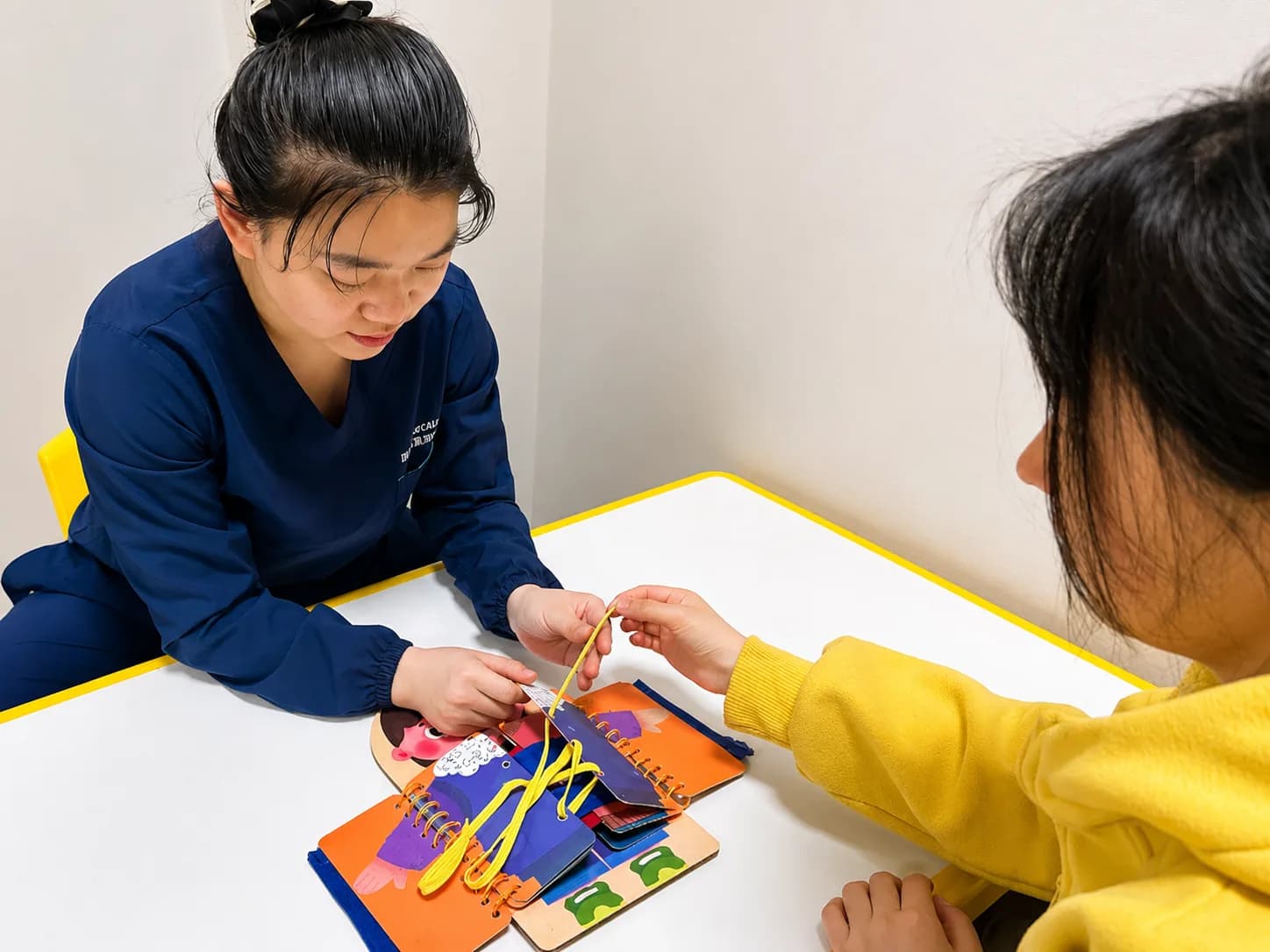
Occupational therapy (OT) is an international approach centered on functional development. OT focuses on real-life situations of daily living, learning, communication, and play. Through targeted training of sensory integration, fine motor skills, self-care, and cognitive adaptation, the child develops control over their body, hand skills, daily self-reliance, and adaptation to the environment. The goal is for the child to participate independently in life and integrate into a group. Occupational therapy is an indispensable, key course for ASD and for a wide range of other conditions.
At Hanshi NeuroLife International Rehabilitation Center (Shangrao), OT is part of the comprehensive program. The core logic is functional: the child learns not 'to move the fingers' but to hold a spoon, draw, fasten buttons, use scissors, get dressed, brush teeth. Methods include a play format, real-life scenarios, and clear 'foundation to independence' goals. OT is tightly linked to sensory integration (the sensory base for all functional skills) and, when indicated, to neuromuscular electrical stimulation (for motor disorders, nerve injuries). It is used broadly: for ASD, global developmental delay, cerebral palsy, post-encephalopathy conditions, motor disorders, nerve injuries, ADHD, and oral or tactile hypersensitivity.
Strengths of the method as delivered at the center: applied format — training is immediately useful in life; individualized programs based on assessment; play-based approach; close connection with sensory integration; clear 'foundation to independence' goals; suitable for all ages and ability levels.
What matters most for parents
OT works with everyday tasks — so consolidation happens in daily life. Our specialists teach parents specific techniques to reinforce skills in real situations (dressing, feeding, hygiene). This significantly improves the results of the program. Some exercises require specialized equipment (especially for the sensory component) and are delivered only at the center.
Initial assessment of functional skills
Specialists assess the sensory profile, fine and gross motor skills, hand–eye coordination, self-care skills, and executive functions. Gesell, PEP, and GMFM scales are used when indicated.
Designing the individualized program
A program is built around concrete life goals — from foundational functions (grasp, holding an object) toward independence in daily life (dressing, hygiene, using utensils).
Regular sessions in play and applied format
Sessions combine sensorimotor training with real-life everyday scenarios. The center's specialized equipment is used (sensory gym, fine-motor trainers).
Coaching parents for home practice
Specialists teach parents specific techniques for real everyday situations (dressing, feeding, hygiene). Skills are consolidated in daily life — this significantly improves results.
Re-assessment of progress and integration with other methods
Regular re-assessment against achieved goals; expansion of the program. OT is tightly linked to sensory integration and, when indicated, to neuromuscular electrical stimulation (motor disorders, nerve injuries).
Explore the Room in 360°
Click and drag to look around the room
Indications and contraindications
Indications
Contraindications
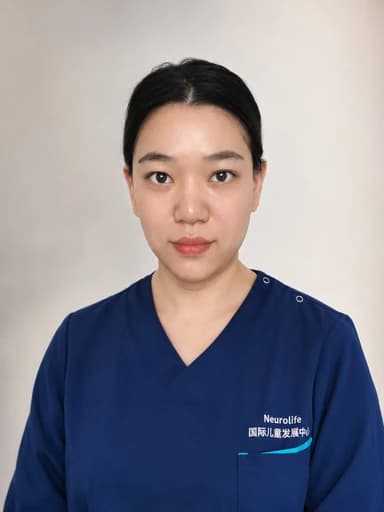
Who performs the procedure




What diagnoses it helps with Occupational therapy (OT)
Book a free consultation
Leave a short request — a coordinator will contact you within 5 minutes, answer your questions and suggest the first steps.