
Transcranial Magnetic Stimulation (TMS)
Non-invasive, painless modulation of cortical neuronal excitability — improvements in speech, cognition, attention, and emotional regulation in children.
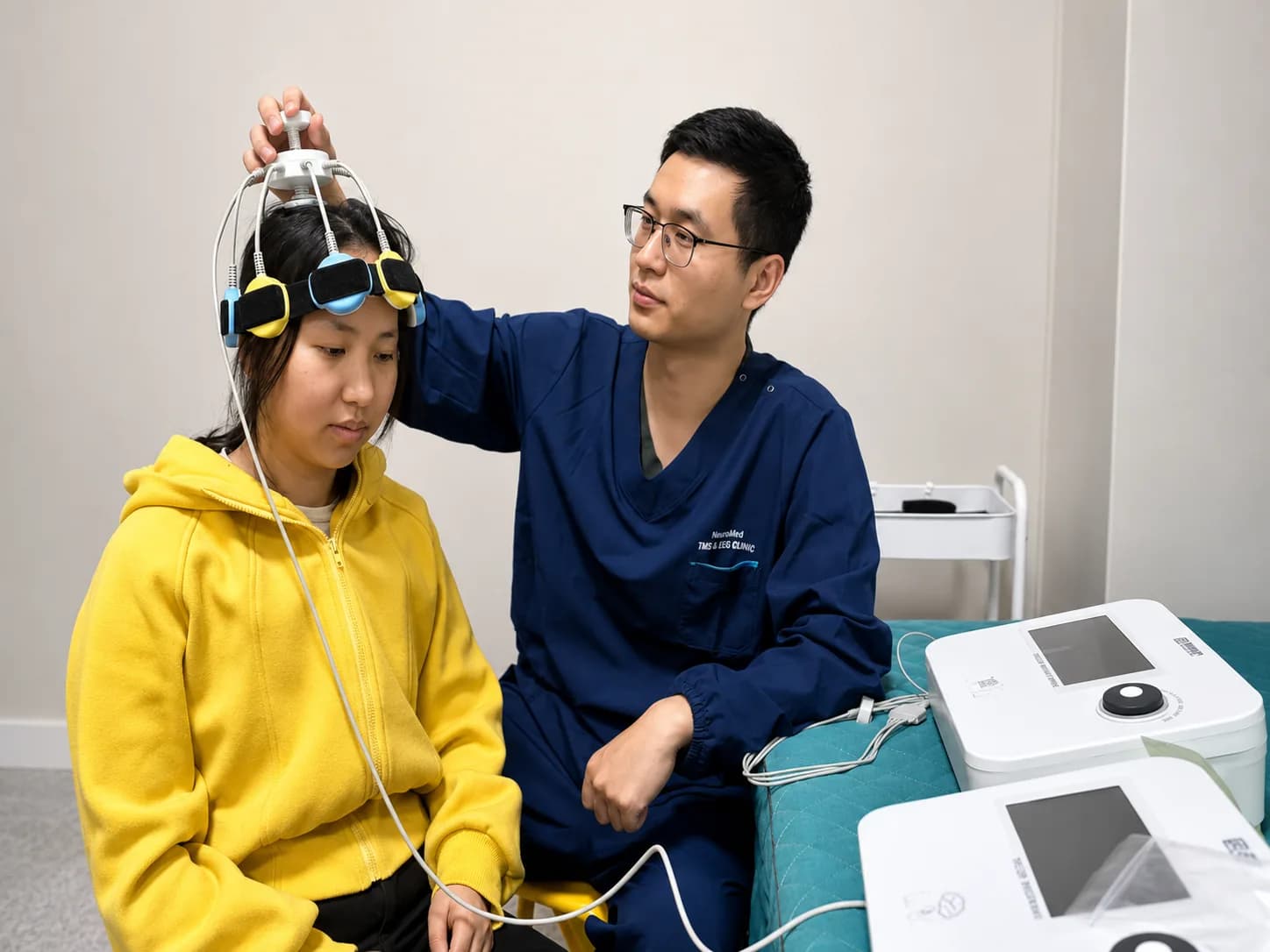
How the procedure works
Transcranial Magnetic Stimulation (TMS) is an instrument-based physiotherapy method in which a pulsed magnetic field is applied to the cerebral cortex. This modulates the excitability of neurons, the release of neurotransmitters, and improves cerebral blood flow and nerve signal conduction. The method is non-invasive, painless, and free of radiation — critically important qualities when working with children. Children generally cooperate well and tolerate the procedure easily.
At Hanshi NeuroLife International Rehabilitation Center (Shangrao), TMS is used within a comprehensive program for children with ASD, developmental delay, attention deficit, speech delay, cognitive impairment, and immaturity of brain function. Based on clinical practice the method yields: improved comprehension and expressive speech; better attention, concentration, and cognitive function; reduced irritability, impulsivity, and stereotypies; broader stimulation of brain development and learning capacity. TMS works at the physiological level (cortical neuronal excitability), while rehabilitation training and TCM methods work at the level of skills and behavior — this combination produces synergy.
Advantages of this method as delivered by the center: non-invasive, painless, and free of radiation — critical for work with children; safe and comfortable, children cooperate well; synergy with rehabilitation courses, TCM methods, and biomedicine; individualized protocols tuned to priority goals.
What matters for parents
Including TMS in the rehabilitation plan is decided by the relevant physician after a comprehensive assessment. The course is individualized, with regular reassessment of effect. TMS does not replace rehabilitation courses — it is delivered as part of them, as instrument-based support.
In-depth assessment by the relevant physician
The physician reviews indications and contraindications for TMS: neurological status, the state of the cerebral cortex by clinical picture, and absence of contraindications (metal in the field, implants, epilepsy with frequent seizures).
Selection of an individualized stimulation protocol
Stimulation parameters are tailored to the child — frequency, intensity, and cortical target; the priority goal (speech, attention, behavior, emotions) is taken into account.
Regular transcranial magnetic stimulation sessions
Sessions are delivered in a child-friendly format — pain-free, without radiation, and without invasive intervention. Children generally cooperate well and tolerate the procedure easily.
Integration with rehabilitation courses and TCM methods
TMS works within a comprehensive program: with speech therapy, ABA, sensory integration, auditory integration, and TCM methods. The synergy is that TMS works on neuronal excitability while training works on skills.
Progress monitoring and decision on a repeat course
Effects on priority goals are reviewed regularly; a decision is made about a break or repeat course. Typically 1–3 courses per year on an individualized schedule.
Explore the Room in 360°
Click and drag to look around the room
Indications and contraindications
Indications
Contraindications
What diagnoses it helps with Transcranial Magnetic Stimulation (TMS)
Book a free consultation
Leave a short request — a coordinator will contact you within 5 minutes, answer your questions and suggest the first steps.