
H&B Neurolife
Procedure

Auditory Integration (Tomatis / AIT)

Digital audio-signal filtering to regulate the auditory system — passive, painless therapy for children with ASD, speech delay, and auditory hypersensitivity.
30 minutes
duration
10–20 sessions
course
1–2 courses
effect
Fill out the form
Description

How the procedure works

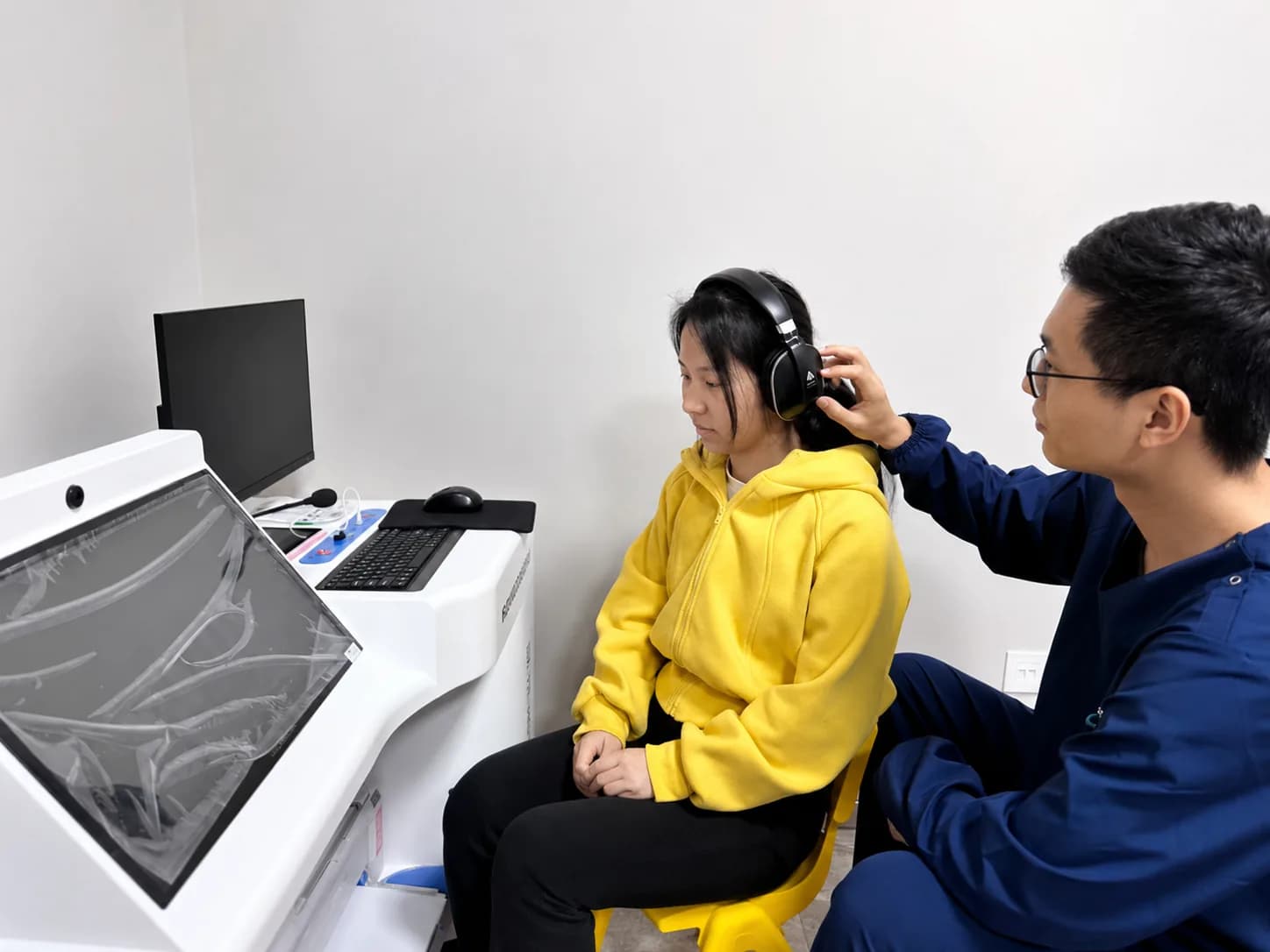
Auditory Integration (Tomatis, AIT) is an instrument-based physiotherapy method in which digital correction and filtering of the audio signal regulates the child's auditory system. The format is passive: the child simply listens in a calm setting, without needing to actively participate. The method is painless, and children accept these sessions easily. Auditory integration works at the physiological level of auditory processing — that is, with how the brain processes sound, rather than with whether the child understands words.

At H&B Neurolife International Rehabilitation Center (Shangrao), auditory integration is primarily indicated for children with speech delay, auditory hypersensitivity, poor auditory filtering, and heightened anxiety. Based on clinical practice the course brings: improvement in speech delay, articulation, and marked echolalia; reduction of overreaction to sound, irritability, and ear-covering habits; better attention span, cooperation, and emotional stability; stronger auditory attention and speech comprehension.

Advantages of this method as delivered by the center: passive, painless therapy that children accept readily; high effectiveness when speech delay, auditory hypersensitivity, and emotional instability co-occur (these presentations are often linked and respond to a single intervention); integration into a comprehensive program with speech therapy, ABA, sensory integration, TMS, and TCM methods.

What matters for parents

Auditory integration works within a comprehensive program — alongside speech therapy, ABA, sensory integration, and where indicated TMS and TCM methods. By itself it does not replace speech therapy (work on comprehension and expression), but it creates the conditions under which speech therapy delivers better results. The course is individualized and follows the specialist's plan.

1

Initial assessment of auditory processing

Specialists assess auditory sensitivity, response to sound, speech profile, and emotional stability; collect history (ear infections, reaction to loud sounds, ear-covering habits).

2

Selection of an individualized listening program

Audio material and digital filtering parameters are selected for the child to match the goals — reducing hypersensitivity, activating auditory attention, supporting speech.

3

Regular passive listening sessions

The child listens to the processed audio signal in a calm setting, without needing to actively participate. Sessions are delivered daily or every other day as part of the course.

4

Integration with speech therapy and sensory integration

In parallel, work continues on receptive and expressive language (speech therapy), sensory integration, and where indicated ABA — auditory integration creates the foundation for a better response to these therapies.

5

Progress monitoring and decision on a repeat course

Changes in auditory sensitivity, speech, behavior, and sleep are reviewed; a decision is made about a break or repeat course.

Virtual Tour

Explore the Room in 360°

Click and drag to look around the room

Important information

Indications and contraindications

Indications

Autism spectrum disorders with speech delay and auditory difficulties
Speech delay, unclear articulation, marked echolalia
Auditory hypersensitivity (hyperacusis), habit of covering ears
Poor auditory filtering, difficulty isolating speech from noise
Heightened anxiety, emotional instability
Restlessness, weak auditory attention
Communication difficulties in children with global developmental delay and post-encephalopathy

Contraindications

Acute inflammatory ear conditions
Severe uncorrected hearing loss
Epilepsy with frequent seizures
Acute infections, fever
Application

What diagnoses it helps with Auditory Integration (Tomatis / AIT)

ADHD

Hyperactivity (ADHD)

A combination of attention deficit, hyperactivity, and impulsivity that affects learning and social adaptation.

Learn more
Anxiety

Anxiety and Fear of Novelty

Heightened anxiety, fear of new environments, fear of strangers, and pronounced shyness.

Learn more
Aphasia

Aphasia

Loss of previously acquired speech or impaired comprehension due to damage to the brain's language areas.

Learn more
Attention

Attention deficit and restlessness

Reduced ability to sustain attention and regulate activity, without marked hyperactivity.

Learn more
Hearing

Auditory hypersensitivity

Heightened reaction to sound and poor auditory filtering — sounds are experienced as excessively loud, distressing, or painful.

Learn more
ASD

Autism and ASD

A neurodevelopmental condition that affects a child's social communication, speech, and behavior from early life.

Learn more
ASD+

ASD with co-occurring conditions

Autism spectrum disorder combined with GI problems, sleep disturbances, epilepsy, or inflammatory processes.

Learn more
Cognition

Cognitive Developmental Delay

Delayed development of attention, comprehension, observation, logical thinking, and conceptual foundations.

Learn more
Echolalia

Echolalia

Echoed speech — repetition of heard words and phrases without functional communicative content.

Learn more
Eye contact

Lack of Eye Contact

Poor or absent eye contact — one of the earliest and most important signs of social-communication disorders.

Learn more
Non-verbal

Non-verbal / minimally verbal

A state in which the child does not speak at all or uses an extremely limited set of words.

Learn more
Picky eating

Oral hypersensitivity and food selectivity

Heightened sensitivity in the mouth area with the associated refusal of facial touch and pronounced food selectivity.

Learn more
SPD

Sensory dysregulation

Disorders of processing and integration of sensory signals — visual, auditory, tactile, vestibular, proprioceptive.

Learn more
Social communication

Social Communication Deficit

A core communication impairment — weak social motivation, difficulty maintaining dialogue, and inability to read facial expressions, tone, and intentions.

Learn more
Social withdrawal

Social Withdrawal and Lack of Interest in Interaction

Being absorbed in oneself, weak social motivation, fear of strangers, and difficulty understanding others' emotions.

Learn more
Speech delay

Speech Developmental Delay

A delay in the child's development of receptive and expressive language relative to age norms.

Learn more
Stereotypies

Stereotypies and repetitive behavior

Repetitive, monotonous movements, actions, or rituals — typical for ASD and sensory dysregulation.

Learn more

Book a free consultation

Leave a short request — a coordinator will contact you within 24 hours, answer your questions and suggest the first steps.

Leave a request

We use cookies and analytics to improve the website experience. Privacy Policy