
DIR/Floortime
DIR/Floortime: child at the center, interest as the compass, emotional connection as the foundation. One-on-one format in a safe and joyful environment.
How the procedure works
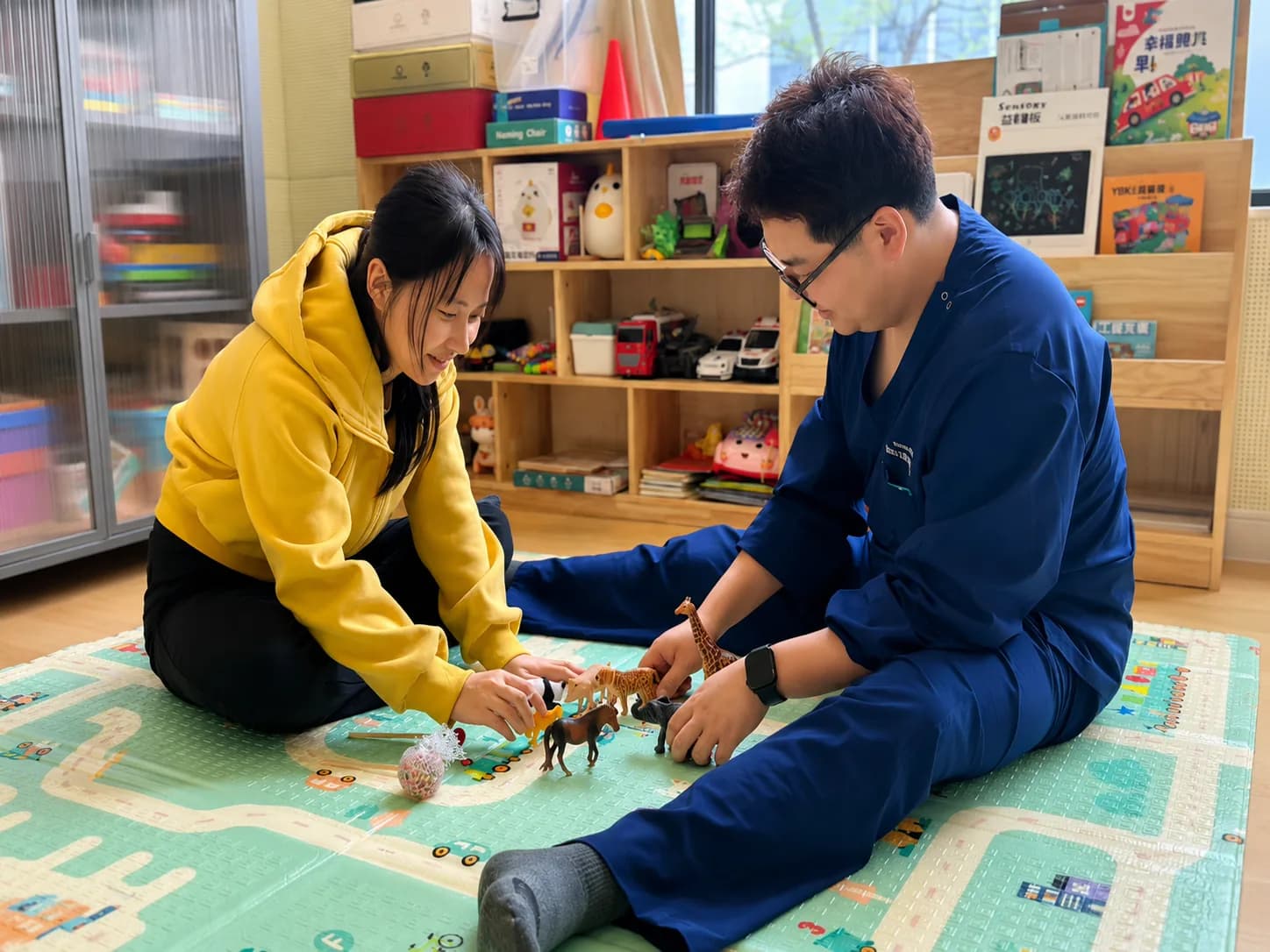
DIR/Floortime is an internationally recognized, evidence-based intervention for autism. It rests on three principles: child at the center, interest as the compass, emotional connection as the foundation. Through play-based companionship and interaction in a one-on-one format, the method develops social communication, emotional expression, attention, and logical thinking. In a light, safe, joyful environment, the specialist literally gets down to the child's level, joins the child's play, and follows the child's interest — creating a sense of equal partnership that becomes the foundation for learning.
At Hanshi NeuroLife International Rehabilitation Center (Shangrao), Floortime is part of the comprehensive GROW program and is especially valuable at the stages of building emotional connection and social motivation. Its principles are relationship first, ability second; respect for the child's pace; and learning through play without pressure. Behind its outward simplicity lies structured work with stages of emotional development and carefully targeted interventions. The method combines with ABA, PCI, sensory integration, and speech therapy.
Strengths of the method as delivered at the center: following the child's interest — 'we follow the play', so the child becomes an active participant; relationship first, ability second; one-on-one format — individualized and targeted; learning through play without pressure; high reproducibility within the family — parents pick up the techniques easily; international evidence base; suitable across the full age range of ASD.
What matters most for parents
One of Floortime's strengths is reproducibility within the family: parents pick up the techniques easily and apply them in natural daily situations. This significantly amplifies the results from sessions at the center. At the G (Guide Base) stage of the GROW program, Floortime is especially valuable — it works in a 'parent + child' format and builds the emotional foundation for all later development.
Initial assessment of emotional development and interests
Our specialists evaluate the child's emotional profile, level of joint attention, initiative, type of play, favorite activities, and strengths — these become the basis for tailoring the approach.
Designing an individualized Floortime plan
A plan is built around the stages of emotional development: which tasks come first — stable connection, joint attention, emotional expression, or logical thinking.
Regular one-on-one sessions
The specialist literally gets down to the child's level, joins the child's play, and follows the child's lead. In a safe and joyful environment, interactions initiated by the child are built up.
Coaching parents in home-based Floortime
Parents learn specific techniques and apply them at home in natural daily situations. This significantly amplifies the results and sustains the emotional connection as a resource for development.
Re-assessment of progress and integration with other methods
Regular evaluation of progress through the stages of emotional development. Floortime combines with ABA, PCI, sensory integration, and speech therapy; at the G (Guide Base) stage of the GROW program it is particularly valuable.
Indications and contraindications
Indications
Contraindications


What diagnoses it helps with DIR/Floortime
Book a free consultation
Leave a short request — a coordinator will contact you within 5 minutes, answer your questions and suggest the first steps.