
Sandplay Therapy (Psychological)
A non-verbal psychotherapy technique: a safe space for emotional regulation, symbolic expression, and trust, through work with sand and miniature figures.
How the procedure works
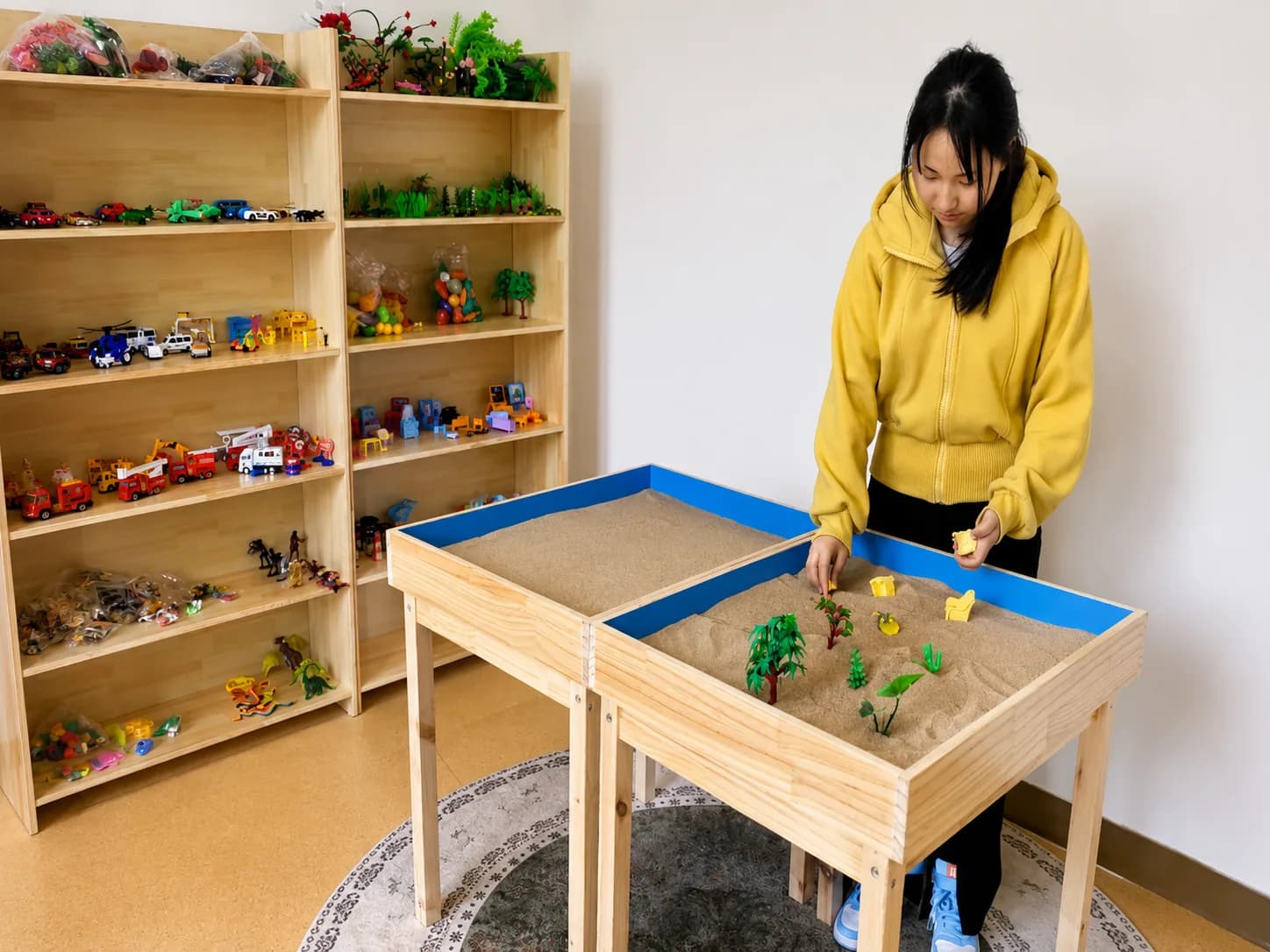
Sandplay therapy is a non-verbal psychotherapy technique grounded in Jungian psychology. With a sandbox, miniature figures, and professional accompaniment, a safe, free, protected space is created. By playing with sand and miniatures, the child bypasses the language barrier, freely expresses their inner world, releases anxiety, builds an understanding of rules, and gradually develops social and communication skills. The method rests on four theoretical foundations: the mechanism of projection (figures 'reveal' inner states), non-verbal communication, individuation (activating the self-healing resource), and symbolic expression (a foundation for abstract thinking).
At the Hanshi NeuroLife International Rehabilitation Center in Shangrao, sandplay therapy is an important supportive method for a wide range of conditions: ASD with emotional and behavioural difficulties, anxiety and depressive symptoms, OCD symptoms, sleep disorders, emotional instability, self-injurious and aggressive behaviour, tics, enuresis on an anxious background. Three formats are available: individual (in-depth accompaniment, focused work with emotions and behaviour), parent–child (improving interaction patterns within the family), and small group (modelling social situations — cooperation, sharing, competition).
Advantages of the method as delivered at the centre: work without pressure — nothing is demanded or probed; individual accompaniment at the child's pace; visual interpretation — the child's work allows the inner state to be 'read'; the parent–child format is available; ecologically safe — psychological support only, no side effects.
What matters for the parent
Sandplay therapy proceeds without pressure — nothing is demanded or probed. This is natural healing through play, where the professional accompaniment of the specialist turns work with sand and figures into a tool for emotional regulation and symbolic work. For non-verbal children the method is especially valuable — it gives a channel for expressing the inner world without the need to speak.
Initial assessment of the emotional state
Specialists assess the emotional profile, level of anxiety, behavioural manifestations, and the picture of parent–child relationships; they determine the format of work (individual, parent–child, small group).
Individualized programme selection
The programme is tailored to the goals — emotional regulation, work with anxiety, restoring the sense of safety, symbolic work, improving interaction patterns within the family.
Regular sandplay sessions
In a safe space with a sandbox and miniature figures, the child freely expresses their inner world. The specialist accompanies without pressure — no demands, no probing questions. The work is interpreted visually.
Parent–child format and parent coaching
When indicated — joint parent-and-child sessions guided by the specialist. The parent receives a tool for understanding the child through the symbolic language of play.
Regular assessment of emotional dynamics
Regular assessment of changes — reduction in anxiety, crying, aggression; improvement in sleep, focus, initiative. Some children need long-term accompaniment as a stable 'place of safety'.
Explore the Room in 360°
Click and drag to look around the room
Indications and contraindications
Indications
Contraindications
Who performs the procedure

What diagnoses it helps with Sandplay Therapy (Psychological)
Book a free consultation
Leave a short request — a coordinator will contact you within 5 minutes, answer your questions and suggest the first steps.