
Sleep Disorders and Nighttime Crying
Also known as: Restless sleep, Difficulty falling asleep, Nighttime crying, Night waking
Program for sleep disorders and nighttime crying in children aged 1–14 years at the Hanshi NeuroLife center (Shangrao). Comprehensive approach: microbiota regulation, neuroregulation, TCM, sensory integration, and medication support when indicated.
What is Sleep Disorders and Nighttime Crying?
Sleep disorders and nighttime crying are a group of conditions in which the quantity and quality of the child's sleep suffer: difficulty falling asleep, frequent night waking, restless sleep, nighttime crying, early waking. In infants — pronounced nighttime crying without a visible cause (one of the early markers of a possible developmental disorder is frequent crying unrelated to hunger, hygiene, or other obvious needs at 4–6 weeks). Sleep disorders in children most often occur as part of other conditions: ASD (typical for the disorder), sensory integration disorder, emotional instability and anxiety, gut microbiota dysbiosis (which, through the gut-brain axis, affects serotonin and melatonin synthesis), and post-encephalopathy states. Sleep is often impaired against the background of GI problems — constipation, diarrhea, and food intolerance.
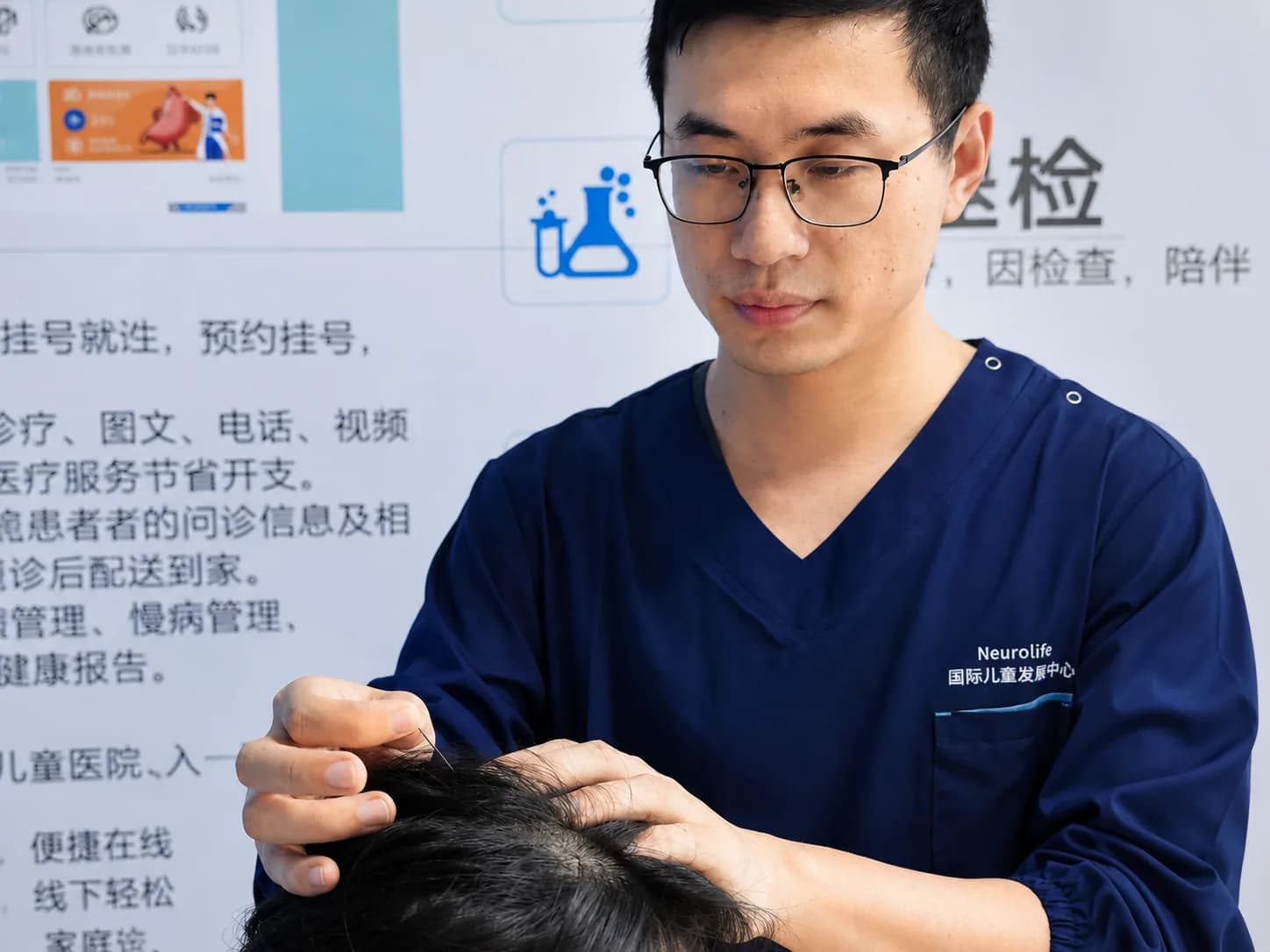
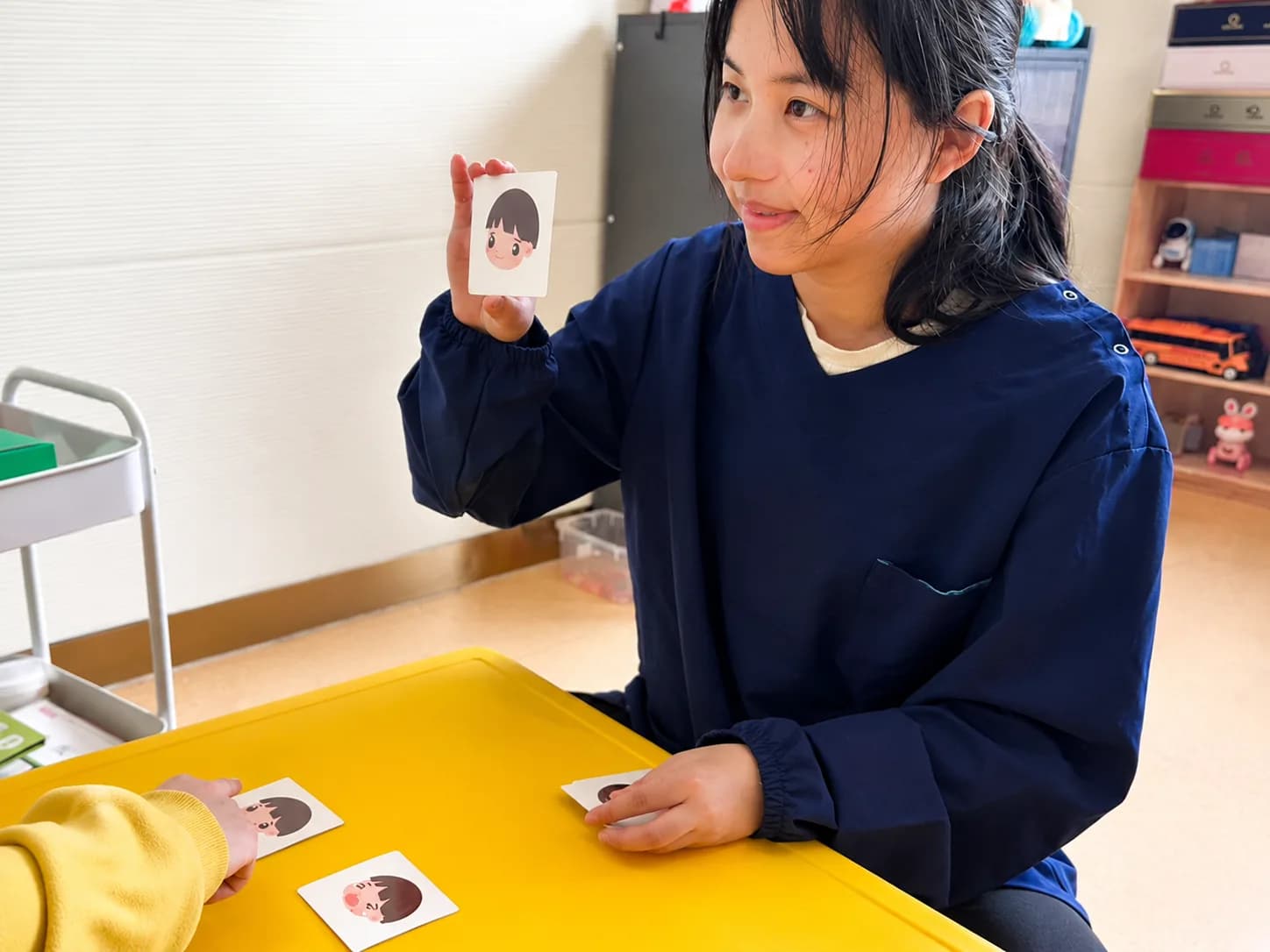
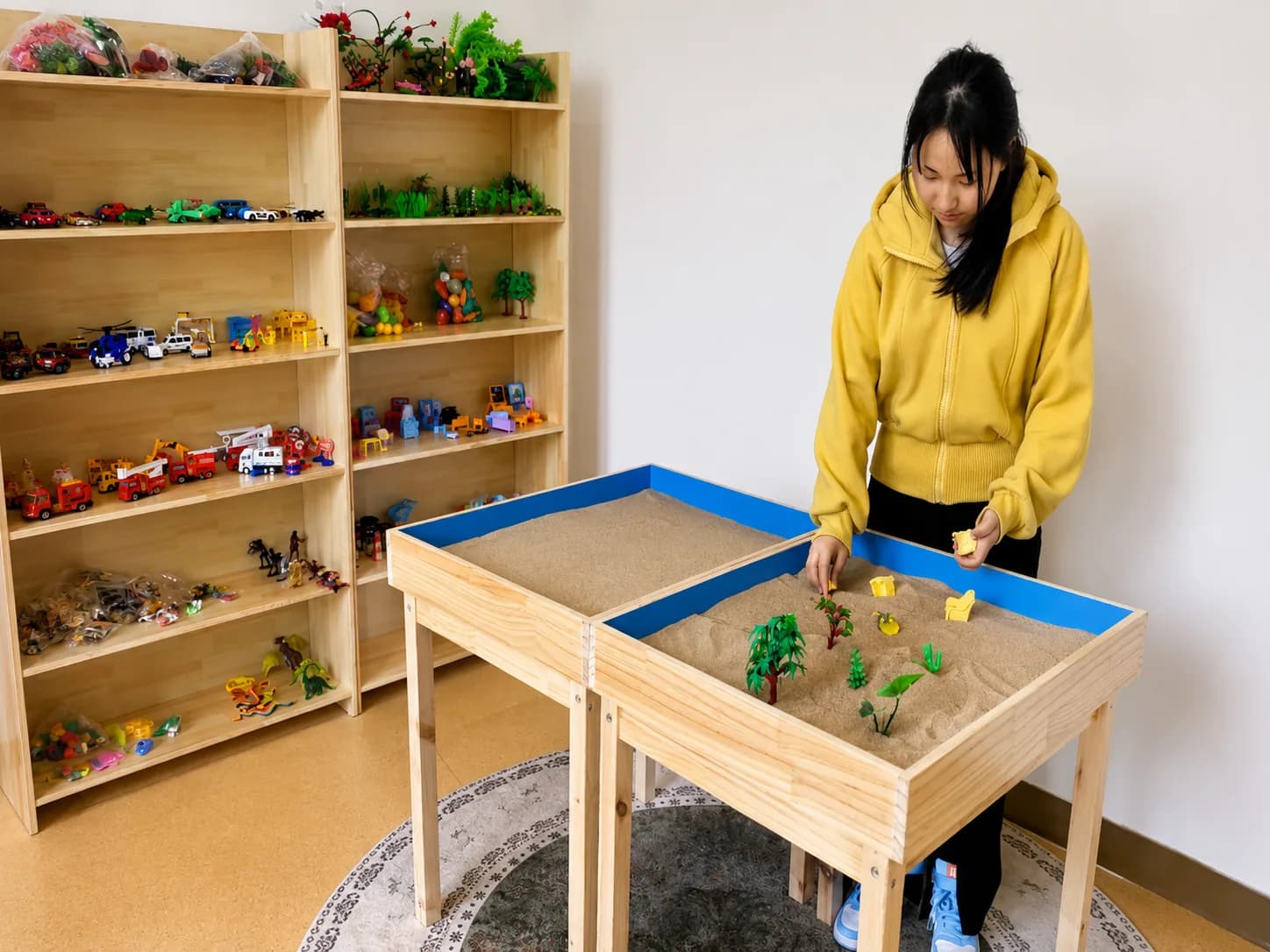
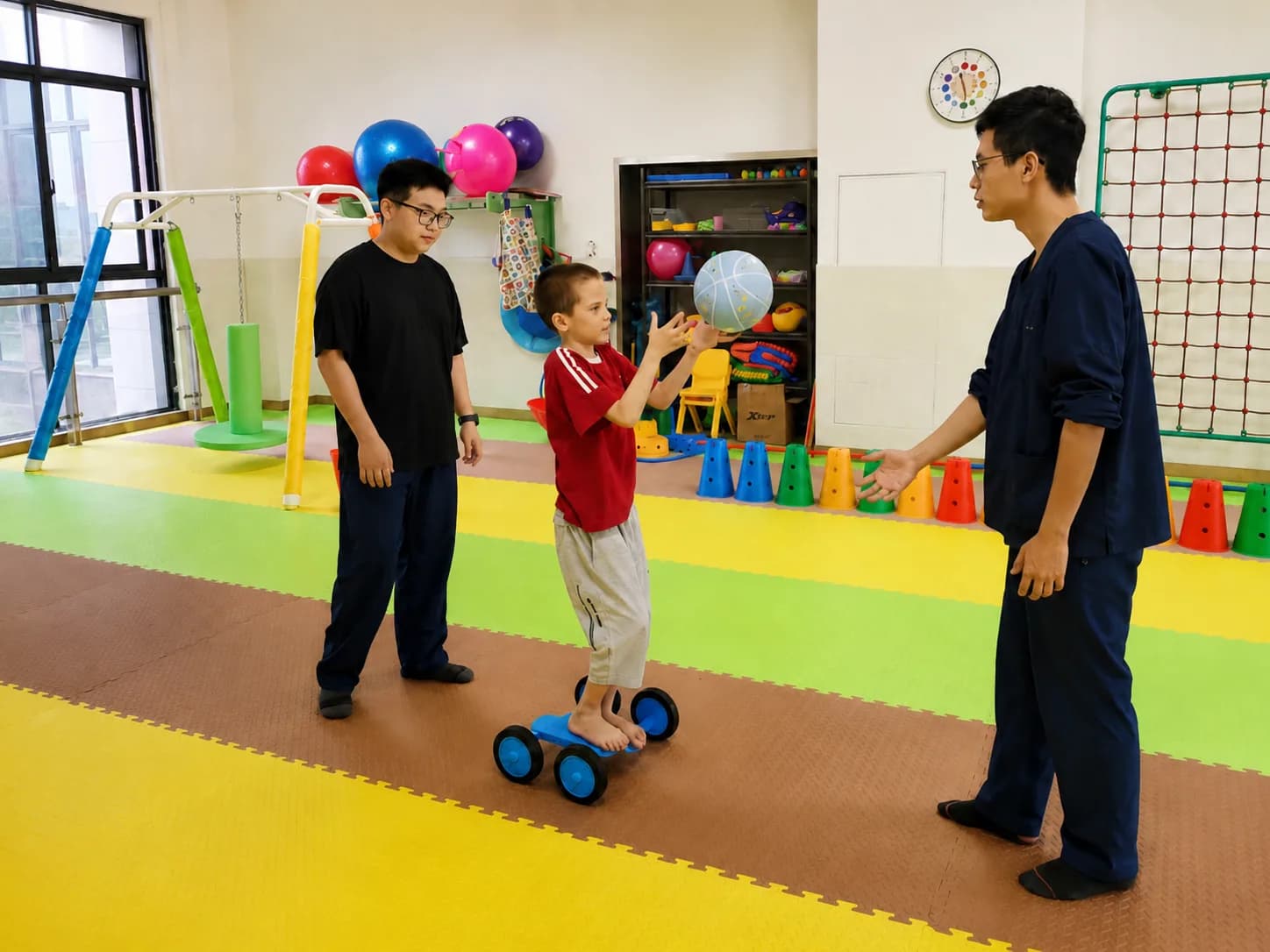
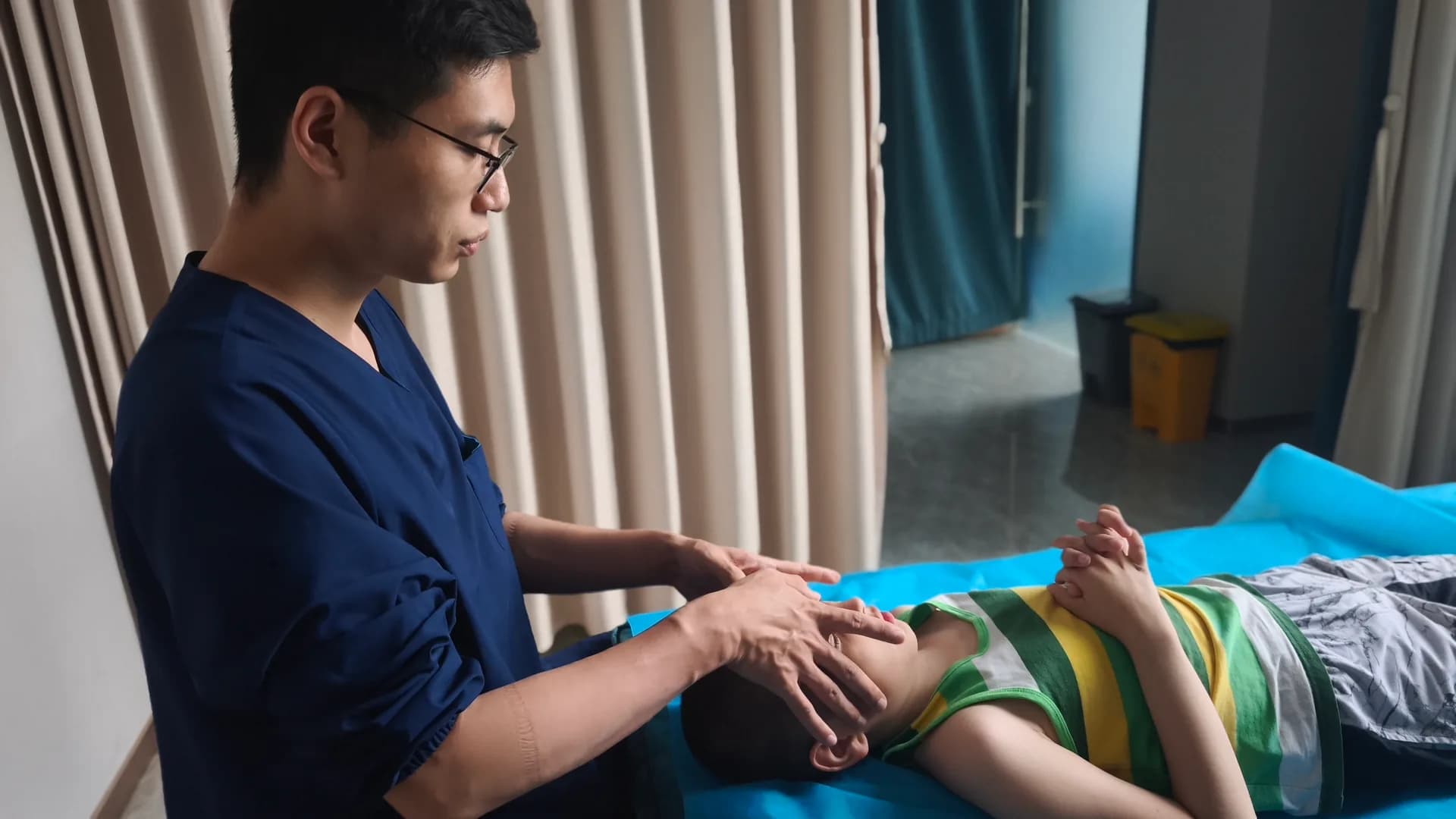
At Hanshi NeuroLife International Rehabilitation Center (Shangrao), the program for sleep disorders works with causes, not only with symptoms. Gut microbiota regulation — precise testing, personalized probiotics, dietary therapy — restores the gut-brain axis and normalizes the synthesis of serotonin and melatonin. Neuroregulation addresses metabolic processes in the CNS. TCM methods — pediatric acupuncture, Tui Na massage, herbal medicine when indicated — harmonize Qi and blood and normalize sleep. Sensory integration addresses sensory overload when it forms the background of restless sleep. Sandplay therapy and Orff music therapy address the emotional component. In severe presentations, medication support is considered by physician's decision.
What matters for parents
Sleep is a "mirror" of the child's overall state. Often, when the microbiota is balanced, sensory overload is relieved, and emotions are stabilized, sleep normalizes without separate work on sleep itself. For this reason, the program always takes a broader view — at the physiological and emotional foundation. Specialists train parents in techniques for building a sleep routine and gentle evening care.
Causes
Most often part of other conditions: ASD, sensory integration disorder, anxiety, gut microbiota dysbiosis (the gut-brain axis affects serotonin and melatonin), post-encephalopathy states, and GI problems.
Symptoms
Difficulty falling asleep, frequent night waking, restless sleep, nighttime crying, early waking, and daytime sleepiness. In infants — pronounced crying without a visible cause.
Diagnostics
Sleep pattern analysis (sleep diary), professional scales (ABC and Shuangxi in ASD), and assessment of emotions and sensory integration. When dysbiosis is suspected — microbiota testing.
Prognosis and treatment approach
Responds well to work with causes: microbiota regulation, neuroregulation, TCM methods, and sensory integration. In severe cases — medication support by the physician's decision.
How we treat Sleep Disorders and Nighttime Crying
Diagnostics
Comprehensive examination and patient assessment by an international team of specialists
Treatment plan
Development of an individual rehabilitation program considering diagnosis specifics
Therapy
Intensive course of procedures: physical therapy, massage, physiotherapy, acupuncture and other methods
Results
Progress evaluation, home recommendations and maintenance therapy plan
Treatment procedures: Sleep Disorders and Nighttime Crying
Doctors treating this condition








Frequently asked questions: Sleep Disorders and Nighttime Crying
Book a free consultation
Leave a short request — a coordinator will contact you within 5 minutes, answer your questions and suggest the first steps.